




















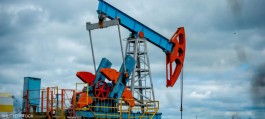













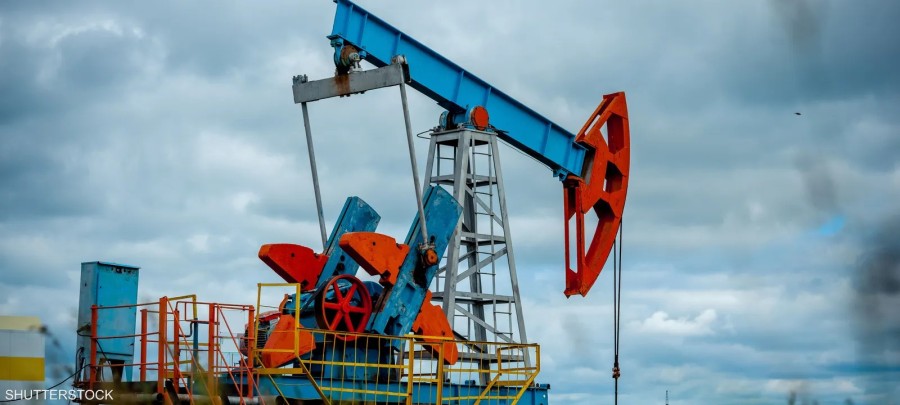


Oil prices retreated from their highest levels in five months, as traders weighed renewed fighting in the Middle East against signs that supplies from the region would remain near pre-war levels.
Brent crude traded near $108 a barrel, after jumping about 4% on Friday, while West Texas Intermediate crude reached about $100.
Tensions remain high in the region, with repeated attacks targeting ships in the Strait of Hormuz over the weekend. On Friday, the Saudi-led coalition supporting the legitimate government in Yemen announced the interception and destruction of a ballistic missile launched towards Yanbu province, two cruise missiles over the Red Sea, and three drones in the southern and Riyadh regions.
Supplies continue to leave the area
Despite the tensions, supplies continue to flow out of the region. The United States said over the weekend that its forces helped escort shipments of more than 100 million barrels of oil through the Strait of Hormuz in the previous week.
In parallel, images taken by Sentinel satellites, as part of the European Copernicus Earth Observation Program, showed 10 oil tankers docked at loading berths in the ports of Yanbu and Al-Muajaz on the Red Sea coast on October 15, up from three tankers on October 10 and five tankers on October 5, the two previous times the satellites passed over the area.
The images showed seven tankers, including three supertankers, docked on October 15 at the loading berth in Yanbu, the main outlet for the East-West pipeline, in addition to three other tankers in Al-Muajaz, located to the south of it.
Satellite imagery has become a key tool for monitoring Gulf exports, after most tankers began sailing with their automatic identification systems switched off, in an attempt to avoid attacks by Iran and the Yemeni Houthi group it supports.
The increase in oil loadings from the Red Sea came after the resumption of crude pumping from the Eastern Province to Yanbu via the East-West pipeline, with flows reaching approximately 5.8 million barrels per day, as announced by Prince Abdulaziz bin Salman, Saudi Minister of Energy, Industry and Mineral Resources, on October 6.
Trump justifies easing pressure on Russia by citing peace talks
In a separate context, Trump said he had reached an agreement with Russia on diesel exports and postponed imposing further sanctions because he did not want to push Russian President Vladimir Putin away from peace talks with Ukraine.
Trump wrote in a social media post: “I am negotiating peace in the war between Russia and Ukraine, and I don’t want to do anything that would foolishly drive Russia away from the negotiating table. We are making great progress.”
On Friday, Trump exempted Russia from new tariffs and sanctions, one week after striking a deal with Putin on diesel exports that he said was aimed at lowering high fuel prices ahead of the U.S. midterm elections scheduled for November 3.
These steps come after Trump has sought for months to deflect blame for rising energy prices from the US war on Iran, as the war has slowed oil shipments out of the Strait of Hormuz, causing global energy prices to rise.
Trump and Zelensky disagree over war
Instead, the US president blamed Ukrainian attacks on Russian energy infrastructure.
Trump accused Ukrainian President Volodymyr Zelensky of prolonging the Russian-Ukrainian war, which has entered its fifth year, because of the military aid he received from his European allies.
In an effort to end the four-year-long conflict, Russian President Vladimir Putin proposed talks next month with Trump and Chinese President Xi Jinping, according to The Wall Street Journal. While Moscow confirmed that discussions were underway, a senior U.S. official said Trump had not agreed to such a summit, the newspaper reported.
In response, Zelensky, in an interview with Bloomberg News on Sunday, accused Trump of trying to pressure Kyiv into surrendering to Russia, escalating a week-long dispute between the two leaders.
The Ukrainian president spoke on Sunday with Trump's negotiators, Steve Wittkopf and Jared Kushner, amid efforts to restart stalled peace talks.
Trump’s moves toward Russia have sparked objections within his own party, with at least 10 Republican senators, along with members of the House of Representatives, expressing their opposition to the two agreements, in an unusual show of opposition to Trump, as Republicans face an increasing prospect of losing their majority in Congress after the midterm elections.
Latest price movements
Brent crude futures for December delivery fell 1.8% to $107.86 a barrel at 10:50 a.m. Singapore time.
West Texas Intermediate crude futures for November delivery, which expire Tuesday, fell 0.7% to $100.65 a barrel. The more actively traded December contract dropped 1.6% to $97.46 a barrel.