

































At a time when Venezuela is seeking to regain its full presence in the oil market with its heavy crude oil barrels, a study issued by the King Abdullah Petroleum Studies and Research Center (KAPSARC) proposes a solution to one of the oldest gaps in the structure of global oil markets: the absence of a benchmark indicator to measure the market situation for this type of crude.
The study, published this month in the journal Energy Economics after being posted on the KAPSARC website, says that OPEC and petroleum policymakers in exporting countries may take from the index signals of market pressure, based on monitoring imbalances in major heavy oil storage centers.
The study, prepared by Jennifer Considine, Philip Galkin, Carlo Andrea Polino and Abdullah Al-Dayel, starts from the paradox that heavy and extra-heavy crude oils constitute 50% to 70% of global oil reserves, but their share does not exceed 15% of global production, due to the difficulty of extracting and refining them.
A real loophole
Wael Mahdi, a Saudi oil market expert and co-author of OPEC in the Shale Oil World, believes that the lack of an indicator to measure the state of the heavy crude market is a real gap, as global pricing benchmarks such as Brent and West Texas Intermediate are highly liquid indicators but primarily reflect the value of lighter crudes, and do not always capture the economies of scale for heavier, higher-sulfur barrels.
He adds that heavy crude remains of strategic importance to the global refining system, as many complex refineries have invested billions of dollars in hydrocracking and desulfurization units specifically to process heavier feedstocks.
None of the heavy grades, such as Mexican Maya, Western Canada Select, Russian Urals, Colombian Castilla and Venezuelan Merey, were able to establish themselves as a global price benchmark, due to their purchase being limited to specialized refineries, and due to the large differences between them in viscosity, density and sulfur content and the absence of special futures contracts for them.
A number of its producers – Russia, Venezuela, Iran and Iraq – were or still are subject to US sanctions that limit their oil sales.
Therefore, traders price heavy crude based on benchmark light and medium crudes such as Brent, the Oman/Dubai average, and West Texas Intermediate. For example, West Canadian Select crude is currently trading at a discount of about $14 per barrel to West Texas Intermediate, according to Bloomberg data.
The specifics of the heavy oil economic cycle
Mehdi points out that the value of heavy crude is subject to drivers independent of the Brent cycle, including refinery conversion margins, high-sulfur fuel oil prices, desulfurization costs, pipeline and port restrictions, sanctions, and shipping rates. He adds, for example, that instability in Venezuela, Mexico, or Iraq could tighten the heavy crude market, even when the global oil situation appears stable.
Lifting US sanctions on Venezuela, which has the world's largest oil reserves, would give the index a boost, as most of its crude is heavy. Washington began easing those sanctions after US forces arrested former Venezuelan President Nicolas Maduro in January.
Inventory-based approach
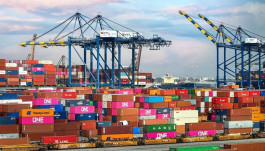
The index prepared by the KAPSARC study is a standard index, like an inflation index or a stock market index, and not a price per barrel. That is, it is not suitable as a contractual basis for pricing shipments, but rather as a guiding reference for the market situation, in that it measures the degree of pressure at four main storage centers -- Cartagena in Spain, Houston in the United States, Vadinar in India, and Dalian in China.
According to the study, the index is based on comparing the price of a barrel at each of the four storage centers with the price of the cheapest similar barrel that can be shipped to the same location, taking into account the transportation cost, so that the four values are then combined into one global figure.
The rising index indicates that stored barrels have become more expensive than they can be brought in, creating an arbitrage opportunity that pushes refinery operators to purchase from abroad rather than draw from storage facilities. Researchers believe this increased demand could justify easing production restrictions on heavy crude producers within OPEC, such as Venezuela and Iraq, without disrupting the market, given that the majority of refineries worldwide are geared towards refining lighter grades.
Paschi Sequential Index for Heavy Crude Oil Storage
The study suggests that OPEC and the International Energy Agency can monitor storage capacity shortages and regional supply imbalances through an index they call PHSIC, the Pasche Sequential Heavy Crude Storage Index, named after Hermann Pasche, the German economist whose methodology was used in the study.
She added that OPEC and the broader OPEC+ alliance, led by Saudi Arabia and Russia, could cite the index publicly, much like central banks cite inflation rates, to justify their decisions and warn of the need to be wary of a shortage in heavy oil markets.
In this context, the study formulated a paragraph that mimics OPEC's media style, stating, for example: Recent upward pressures in the PHSIC index indicate pressure on regional supply chains, and the OPEC+ group will continue to closely monitor these developments.
One of the indicators that OPEC currently relies on in its assessment of market conditions is the level of commercial inventories of OECD countries, although it does not take into account the inventories of China, India and other non-member economies in Asia, which now account for the largest share of demand growth.
Therefore, Mehdi believes that preparing a credible index could give producers, refineries, and traders a clearer view of whether heavy crude is heading towards structural scarcity or abundance, and that the Gulf countries, especially Saudi Arabia, which exports a wide range of crudes, would benefit from it.