



















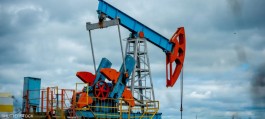


















Oil prices continued their gains after President Donald Trump downplayed the likelihood of near-term talks with Iran, while threatening wider strikes, as risks to global supplies extended beyond the Middle East to the Black Sea.
Brent crude rose above $95 a barrel, marking its fourth consecutive day of gains, while West Texas Intermediate climbed above $88. Trump vowed to retaliate if the Iranian-backed Houthi rebels in Yemen disrupt shipping in the Red Sea, and reiterated his threats to launch an imminent strike on Jabal al-Fas, a site believed to house a secret nuclear facility.
The U.S. military launched attacks on Iran for the eleventh consecutive day in an effort to weaken the country's ability to threaten commercial shipping in the Strait of Hormuz, according to U.S. Central Command, which added that the waterway remains open despite the Iranian attacks.
Oil futures have risen this month as the United States and Iran have escalated hostilities across the Middle East, with three tankers attacked in recent days in the Strait of Hormuz near Oman.
The Ukraine crisis is exacerbating pressure on the market.
Outside the region, the market is also dealing with a series of attacks on the Caspian Pipeline Union (CPC) terminal on Russia’s Black Sea coast, through which most of Kazakhstan’s crude oil is exported.
Trump said on Tuesday that Iran desperately wanted to meet, adding that the United States was not interested. Tehran rejected claims that it was seeking talks. Crude oil prices have fluctuated repeatedly depending on the prospects of escalation and de-escalation.
Jay Hatfield, CEO of Infrastructure Capital Management, told Bloomberg: “Our view is that we’ll remain somewhat within a price range of $80 to $90, depending on the news flow. If the Red Sea were to actually close, that would be a threat. We haven’t seen that yet. And it could push us above $100.”
Red Sea threats expand supply risks
The impact of the Houthi threats to Saudi maritime traffic began to emerge, as some tankers appeared to temporarily halt their journeys as they approached Yemeni waters, while others carrying Saudi oil reversed course and headed towards the Suez Canal. However, other vessels continued their transit towards the region.
The Red Sea became a vital route for Saudi exports during the war, allowing the kingdom to reroute some flows via pipelines and bypass the Strait of Hormuz. Monitored commercial shipping traffic through the narrow waterway near Iran fell to its lowest level in three weeks.
Brent crude could surpass $100 a barrel before the end of the year if the conflict in the Middle East drags on and commercial inventories in OECD countries decline further, according to a Bernstein note.
Goldman Sachs Group also indicated the possibility of prices returning to triple-digit levels, although that is not the bank's baseline scenario.