





























Gold held onto its gains, supported by buying on the dip, even as hostilities in the Middle East pushed oil prices to multi-week highs, reigniting fears that inflationary pressures in the United States could prompt the Federal Reserve to raise interest rates.
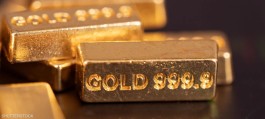
Gold traded near $4,120 an ounce, after rising 3% over the previous two days, as buying supported the metal when prices dipped. This came as the United States and Iran indicated they were not ready to return to the negotiating table following the escalation of attacks.
There were also reports of attacks targeting tankers transiting the Red Sea, the first such attacks since the conflict began in late February, which could lead to an escalation. The waterway has been a vital alternative route, particularly for Saudi crude oil stranded by the Strait of Hormuz. The Iranian-backed Houthi group in Yemen claimed responsibility.
Traders are now assessing the impact of rising energy prices against weak US economic data, while looking for clues about the Federal Reserve's interest rate path.
High borrowing costs pose a downside to gold, which does not yield interest. Traders are divided on whether the Federal Reserve will raise interest rates at its meeting next week, with the lack of forward guidance under new chairman Kevin Warsh adding to the uncertainty.
Gold had largely moved inversely to Treasury yields during the conflict, until it held above $4,000 this week, a level some traders see as providing support.
The precious metal is still down about a fifth since the United States and Israel launched strikes on Iran in late February, following a multi-year rally that pushed the metal to a record high near $5,600 the previous month.
Gold faces resistance near $4200 an ounce
Bart Melek, global head of commodity strategy at TD Securities, wrote in a note that gold’s recent rally was unusual, given the sharp rise in energy prices following recent rounds of escalation in the Middle East.
He said: This rise does not appear to represent a strong expansion in long positions, but rather is driven by short covering and buying when prices decline, after technical support levels held during the previous sell-off.
He added that the high interest rate environment suggests that gold may be headed for a renewed decline towards the support level of approximately $3,900 per ounce, adding that the metal may face imminent resistance at the $4,200 per ounce level.
Spot gold fell 0.2% to $4,122.18 an ounce at 2:38 p.m. in Singapore. Silver declined 0.4% to $59.53 an ounce.
Platinum and palladium rose slightly, while the Bloomberg Dollar Spot Index, a measure of the US currency's performance, fell 0.1% after ending the previous session virtually unchanged.