





























Gold prices fell on Thursday, trading near their lowest levels in about a week, after renewed military confrontations between the United States and Iran led to a rise in oil prices, which revived concerns about inflation and reinforced expectations that interest rates would remain high for a longer period.
The pressure on the precious metal came at a time when markets are increasingly betting that the US Federal Reserve may continue to tighten monetary policy, amid rising inflationary risks stemming from higher energy prices.
The US military announced Wednesday that it had carried out new military strikes inside Iran to ensure continued navigation through the Strait of Hormuz, prompting Iran to launch attacks on Kuwait and Bahrain, in the latest escalation that threatens efforts to end the war and further destabilizes the region.
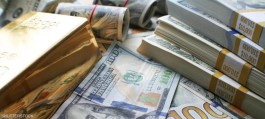
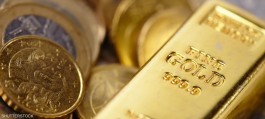
Spot gold fell 0.2% to $4,068.77 per ounce by 8:22 AM Riyadh time, after hitting its lowest level since July 1st during Wednesday's session. US gold futures for August delivery also declined 0.1% to $4,077.60 per ounce.
Interest rate hike bets increase pressure on gold.
Kelvin Wong, senior market analyst at OANDA, said the main factor driving gold's continued decline is the market's re-prioritization of the likelihood of a second interest rate hike by the US Federal Reserve, perhaps as early as the first quarter of next year.
He added that the recent military confrontations have shown that the temporary ceasefire agreement between the United States and Iran has become very fragile, which means that the situation could change rapidly in the coming period.
Data from the Chicago Board of Trade's FedWatch tool shows that markets are now pricing in a 68% probability of an interest rate hike at the September meeting, while expectations rise to 87% for another increase in January 2027.
Inflation is back in the spotlight
The minutes of the US Federal Reserve meeting held last month also showed that concerns about persistent inflation were strongly present among monetary policymakers.
The minutes indicated that central bank officials, led by Federal Reserve Chairman Kevin Warsh, adopted a more hawkish approach, despite simplifying the monetary policy statement, amid a growing conviction that price pressures were becoming more widespread and might warrant further interest rate hikes.
Although gold is traditionally seen as a hedge against inflation, rising interest rates reduce its appeal because it is a non-yielding asset, prompting investors to favor assets that offer higher returns.
Bank of America lowers its gold price forecast
In this context, Bank of America announced a 14% reduction in its average forecast for gold prices in 2026, to $4,360 per ounce, justifying this by its expectation that the Federal Reserve will adopt a more restrictive monetary policy in the coming period.
This reduction reflects a change in the outlook of one of the world's largest investment banks regarding the performance of gold, with the increasing likelihood that high interest rates will persist for longer than markets previously anticipated.
Performance of other precious metals
As for other precious metals, spot silver prices fell by 0.5% to $57.98 an ounce.
In contrast, platinum rose 1.1% to $1,595.51 an ounce, and palladium climbed 0.9% to $1,224.12 an ounce.