
































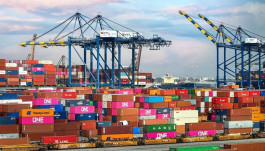






Shipping traffic in the Strait of Hormuz came to a near standstill on Thursday after the United States launched airstrikes on Iran for the second day in a row, amid signs that the truce between the two sides is becoming increasingly fragile.
Ship tracking data showed that observed movements in the world's most important energy waterway were largely concentrated along an Iranian-backed route near the northern end of the strait, while the US-backed Omani route remained quiet.
Of the large vessels, only a supertanker under US sanctions, en route out of the Arabian Gulf, and an Iranian-flagged container ship were spotted in the strait. However, the possibility remains that some ships may have transited with their transponders switched off.
This slowdown in shipping traffic follows a series of Iranian attacks on vessels, prompting the United States to launch airstrikes, coinciding with President Donald Trump's announcement of the end of the ceasefire with Iran. Approximately 14 cargo ships transited the strait in both directions on Wednesday, the lowest number since the interim peace agreement in mid-June.
Interference disrupts ship tracking data
This represents a sharp shift from recent daily activity in the strait. In the three weeks following the interim agreement between the United States and Iran to reopen the Strait of Hormuz, the average daily transit of cargo ships was 34, peaking at 59 on June 24, according to Kepler data. This compares to fewer than 20 ships per day on most days of the war.
While the movement of liquefied natural gas tankers through the strait remained completely halted, two empty ships recently entered the Gulf of Oman, heading towards the eastern entrance of the Strait of Hormuz.
Signs of intermittent electronic jamming also emerged after ships southeast of the Omani city of Lima in the Gulf of Oman appeared to be sailing at unusually high speeds of at least 30 knots early Thursday. This could indicate the activation of defensive systems designed to disrupt hostile drones and prevent them from attacking infrastructure, potentially affecting the ships' transponders and the accuracy of their navigation tracking data.