
































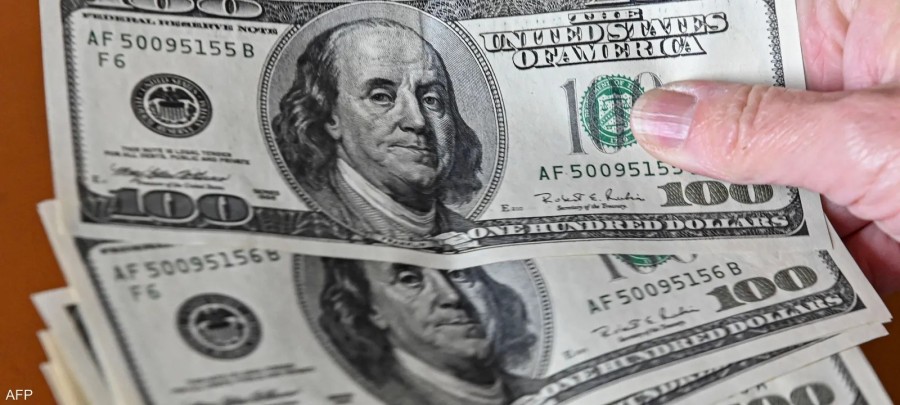


The US dollar weakened against major currencies on Wednesday, as US Treasury yields retreated from their recent highs and investors turned their attention to the minutes of the Federal Reserve's latest monetary policy meeting.
Renewed tensions in the Middle East and a dearth of economic data scheduled for release may increase the focus on the meeting minutes, especially as investors look for clues about the path of interest rates, following a global sell-off in bond markets on Tuesday.
In trading, the dollar index, which measures the performance of the US currency against a basket of six major currencies, fell by 0.21% to 99.43 points.
The euro rose 0.19% to $1.1585, remaining close to its two-month high reached earlier this week. Sterling also climbed 0.16% to $1.3554 after data showed UK inflation rose in July in line with expectations.
The Japanese yen also rose to 159.15 yen to the dollar, moving away from the closely watched 160 yen level, after giving up a large part of the gains it had made on the back of interventions by authorities in the foreign exchange market.
Declining bond yields limit dollar gains
The sell-off in US Treasury bonds appeared to have temporarily halted. The yield on the benchmark 10-year Treasury note fell to 4.686%, while the 30-year yield dropped to 5.271%, after reaching its highest level in nearly 20 years.
The minutes of the Federal Reserve meeting are scheduled to be released at 2:00 PM Eastern Time, 6:00 PM GMT, on Wednesday.
Data released in recent weeks has pointed to a slowdown in the US economy, including unexpected job losses in July, along with moderate inflation rates, prompting investors to reduce their bets on interest rate hikes.
Analysts said: If the Federal Reserve does not proceed with the interest rate hike that markets are currently pricing in, the prospects for higher bond yields here should be very limited.
They added: “Labor market and inflation surprises are decreasing, and this usually coincides with a narrowing of the dollar’s yield advantage, which in turn is reflected in the weakness of the US currency.”
Meanwhile, the stalemate in the Middle East has pushed oil prices closer to their highest levels in three weeks, keeping inflation risks alive.
US President Donald Trump said on Tuesday that there were no talks with Iran and that the Strait of Hormuz was open, while Iran said the strait remained closed to shipping.