










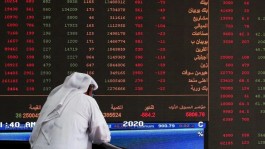





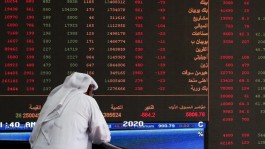


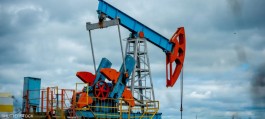

















Oil prices jumped more than 2% during trading on Thursday, hitting their highest level in more than six weeks, as geopolitical risks escalated in the Middle East after Houthi rebels targeted oil tankers in the Red Sea, while the United States launched a new round of military strikes against Iran.
Brent crude futures rose $2.20, or 2.3%, to $96.27 a barrel, the highest level since June 8.
Brent crude had ended the previous session up more than $3 at $94.07 a barrel, approaching its highest level in six weeks.
U.S. West Texas Intermediate crude futures also rose by about $1.65, or 1.9%, to $88.48 a barrel, after having recorded gains of 3% during Wednesday's session.
Tensions in the Strait of Hormuz are escalating.
Iran’s Revolutionary Guard announced that an oil tanker caught fire following an explosion while attempting to cross a route it described as mine-strewn south of the Strait of Hormuz, while two other tankers turned back from their course.
The Revolutionary Guard said in a statement that the Strait of Hormuz is under its control and completely closed as long as US military operations continue in the region, warning that no tanker will be allowed to enter or leave the strait without coordination with Iranian authorities.
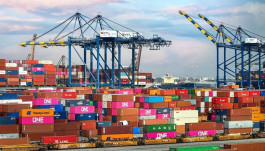
This escalation reflects growing concerns about the security of one of the world's most important maritime oil shipping lanes, through which a large portion of global crude exports pass.
The Houthis are expanding the circle of confrontation.
In addition to the escalation in the Strait of Hormuz, the Iranian-backed Houthis opened a new front by announcing their intention to target ships transporting Saudi oil through the Bab al-Mandab Strait, as well as imposing a naval blockade on Saudi Arabia.
Priyanka Sachdeva, senior market analyst at Phillip Nova, said the oil market faces a rare risk of simultaneous supply disruptions through the Straits of Hormuz and Bab el-Mandeb.
She added that the geopolitical risk premium has returned strongly to oil prices, but noted that a sustained upward trend requires evidence of a prolonged disruption to shipping or an actual and significant interruption in oil supplies.
Targeting of Saudi tankers and concerns about supplies
The Houthis announced that they carried out a military operation targeting two Saudi oil tankers, while maritime security reports indicated that one of the two ships, the Saudi-flagged tanker Insilia, was attacked while sailing in the Red Sea.
The Houthis also confirmed that they forced about 10 ships to turn back after issuing warnings not to sail to Saudi ports.
Observers believe that the naval blockade declared by the Houthis on Saudi Arabia in the Red Sea could threaten global energy supplies, not just oil exports coming from the Gulf.
In the same context, the spokesman for the Iranian Revolutionary Guard warned shipping companies, via a post on the X platform, that the southern route of the Strait of Hormuz is mined.
An unprecedented threat to the most important oil transport routes
Saul Kavonic, head of energy research at MST Markey, said the new threat to shipping in the Red Sea could disrupt flows of up to 5 million barrels per day of oil.
He explained that this route represents the main path for Gulf oil exports that avoid passing through the Strait of Hormuz, which means that any disruption to it could increase pressure on global supplies and raise crude prices even further.
Meanwhile, the US military announced that it had carried out its 12th consecutive night of attacks on Iran, hours after US President Donald Trump vowed to destroy an Iranian bridge or power plant every time Iran targets a ship crossing the Strait of Hormuz, in a new escalation that raises the level of military confrontation between the two sides and increases concerns about the future of global energy markets.