





































Gold prices rose to a three-week high during Asian trading on Wednesday as the US dollar weakened after President Donald Trump agreed to a two-week ceasefire with Iran, averting planned strikes on the country's civilian infrastructure.
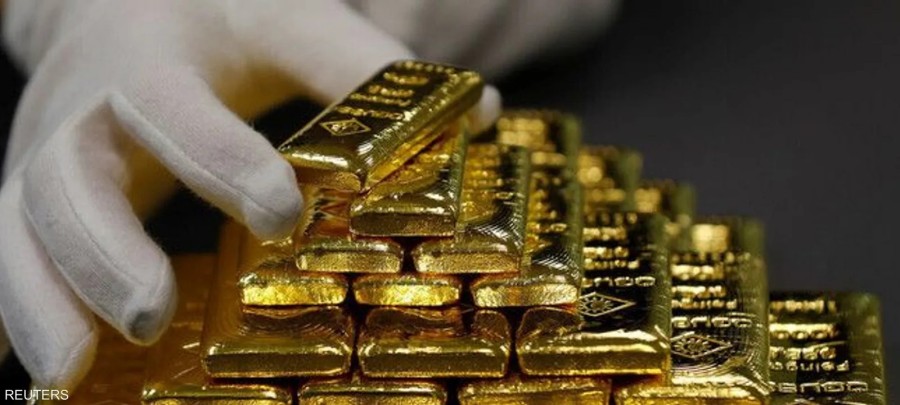
Spot gold rose 2.5% to $4,821.48 an ounce by 04:38 a.m., reaching its highest level since 19/03.
US gold futures also advanced 2.5% to $4,849.25 an ounce.
Among other precious metals, silver prices rose 4.7% to $76.44 an ounce, while platinum climbed 2.5% to $2,030.60 an ounce.
Trump suspends military action against Iran for two weeks
Trump said in a social media post that he would suspend military action against Iran for two weeks, adding that the United States had already achieved its primary military objectives.
The announcement came less than two hours before the 4:00 a.m. deadline, which investors had been watching closely as a potential catalyst for a major escalation.
Earlier today, Trump warned that an entire civilization would die tonight if Iran failed to comply.
The ceasefire, brokered by Pakistan after last-minute diplomatic efforts, is conditional on Iran guaranteeing the safe reopening of the Strait of Hormuz, a key artery for about 20% of global oil flows.
Iran also indicated a conditional willingness to de-escalate, saying that safe passage through the strait would be possible during a ceasefire, provided that hostilities ceased and ships coordinated with Iranian authorities.
Oil price collapse and dollar decline
Markets reacted quickly, with oil prices plunging more than 15% and high-risk assets surging, while the dollar came under pressure.
The US dollar index fell by about 1% in Asian trading on Wednesday, making bullion cheaper for holders of other currencies.
Despite the appeal of traditional bullion as a safe-haven asset, it came under pressure last month as oil prices rose sharply, raising inflation fears and expectations that the US Federal Reserve may keep interest rates high for longer.
Market participants are also looking ahead to the U.S. Consumer Price Index (CPI) report for March, due to be released on Friday, which is expected to provide the first clear indication of the impact of the recent surge in energy prices.
Economists expect headline inflation to have accelerated on a monthly basis, driven largely by higher fuel costs, which could complicate the outlook for Federal Reserve policy.