












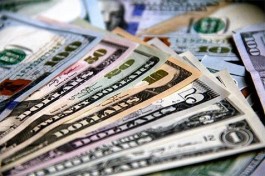










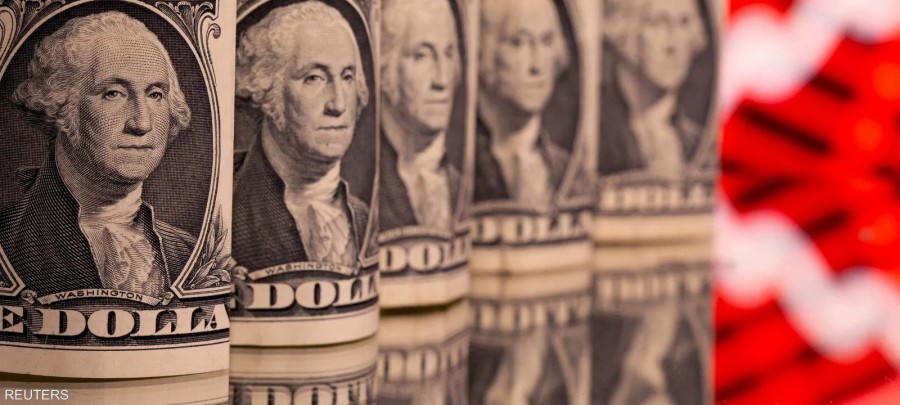


The US dollar held near its recent highs during Tuesday's trading, as markets awaited the expiration of the deadline set by the United States for Iran to reopen the Strait of Hormuz or face strikes targeting its infrastructure.
This stability was driven by escalating tensions in the Middle East, where the closure of the vital Gulf corridor led to a sharp rise in energy prices, pushing investors towards the dollar as the most effective safe haven.
These developments have helped to support the US currency, especially in Asian markets, despite some expectations that a settlement may be reached that could limit the continued rise.
Cautious anticipation before the decisive moment
Hopes for a deal or breakthrough prevented a larger rush to buy dollars during the Easter holiday, but markets remained nervous with a clear absence of sellers before the US deadline.
Markets are awaiting statements from US President Donald Trump as the deadline approaches, with expectations that this moment will determine the direction of markets in the coming period.
In this context, major currencies such as the Japanese yen fell to 159.80 against the dollar, approaching their lowest levels in decades, levels that prompted authorities to intervene in 2024.
The dollar index rose slightly to 100.03, after hitting 100.64 last week, its highest level since May 2025.
A delicate balance between assets
Brent Donnelly, president of Spectra Markets, noted that markets tend to hold onto the dollar in anticipation of any further escalation, while stocks, gold, and some other currencies continue to perform well, limiting the dollar's gains.
He added that it is difficult to make accurate predictions at this stage, while waiting for developments in the coming hours to see the course of the escalation between Iran, the United States and Israel.
Trump hinted at the possibility of a swift and severe strike against Iran, threatening to target vital infrastructure such as power plants and bridges, disregarding potential international criticism. These statements reflect a clear escalation in the US position, further increasing uncertainty in global markets.
Iran strengthens its control over the Strait
Thu Lan Nguyen, head of currency and commodity research at Commerzbank, said the Iranian leadership has demonstrated a remarkable ability to exert complete control over the Strait of Hormuz.
She added that Tehran seeks to use this control as a tool to achieve long-term strategic interests, further complicating the situation.
This comes amid an exchange of attacks between Iran and Israel on Tuesday, with Tehran refusing to reopen the Strait of Hormuz, while Israel announced it had carried out airstrikes targeting government infrastructure inside Iran. Iranian missiles were also intercepted in both Israel and Saudi Arabia, reflecting the widening scope of the confrontation.
Global currency movements under pressure
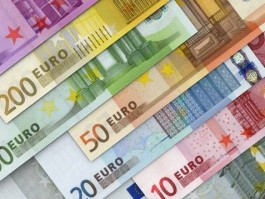
The euro held steady at $1.1535, as markets anticipate the European Central Bank will raise interest rates three times before the end of the year.
European officials confirmed that the bank is prepared to act quickly if inflationary pressures persist, especially with rising price expectations accelerating.
Meanwhile, currencies such as the Australian and New Zealand dollars declined, despite recovering from their lowest levels, to trade at 0.6912 and 0.57 respectively.
The South Korean won also remained weak above the 1,500 level, a level seen only during previous major crises, while the Indonesian rupiah hit an all-time low.
The Chinese yuan, however, has maintained its relative stability, reflecting possible interventions to support the currency.
Will the dollar decline or continue to rise?
Analysts at Commonwealth Bank of Australia said the dollar could weaken slightly in the near term as a result of market optimism about the possibility of ending the war.
They pointed out that the decisive factor is the opening of the Strait of Hormuz, and not just the withdrawal of the United States from the conflict.
Given these circumstances, the dollar remains supported by geopolitical risks, while markets remain suspended between hopes for de-escalation and fears of escalation.