

































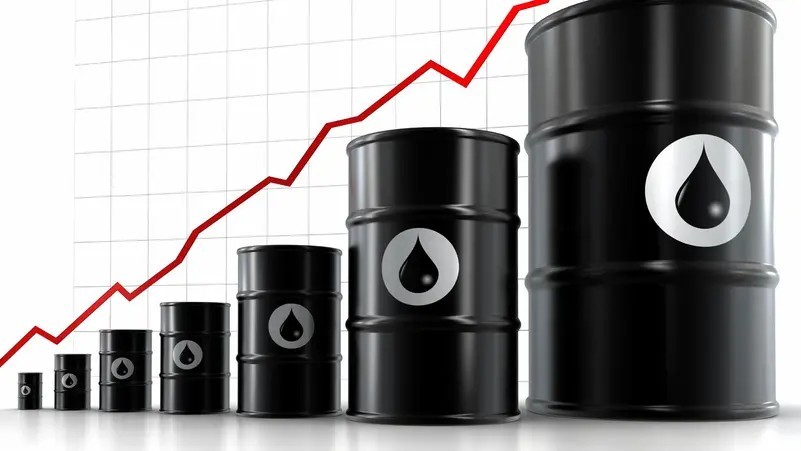


Oil prices rose for a third day after US President Donald Trump escalated his threats to destroy key Iranian infrastructure if his demands are not met before Tuesday's deadline.
Brent crude traded near $111 a barrel after rising 0.7% in the previous session, while West Texas Intermediate crude reached about $115 after closing at its highest level since June 2022.
Trump escalates tensions with Iran
Trump said on Monday that talks with Iran were going well, although he listed reopening the Strait of Hormuz as a top priority.
The US president revealed the consequences that Iran would face if it did not reach an agreement before the deadline of 8 p.m. Eastern Time on Tuesday.
He said the US military could destroy every bridge in Iran by midnight tomorrow, adding that power plants would burn, explode, and never be used again, which could constitute a breach of the Geneva agreements.
Iran has warned that it will respond to such strikes by escalating its attacks on the region's energy infrastructure, which could exacerbate the global fuel crisis and amplify the damage to the global economy.
Price scenarios: between escalation and de-escalation
The war, now in its sixth week, has disrupted oil markets, causing a severe supply shock.
Robert Rennie, head of commodities research at Westpac Banking Corp., said: If Trump moves to a 'total destruction' phase and Iran follows up with 'more intense' and 'wider' attacks, we would expect to see momentum that pushes prices above $110 and into $120.
He added: “If Trump extends the deadline again, we will remain in the current range of $95 to $110 for the time being.”
Increasing signs of supply shortages
As the war continues, other signs of concern about near-term supplies are emerging.
The spot spread for West Texas Intermediate crude, the difference between the two nearest contracts, traded near $15.50 a barrel on Monday, a level close to the highest premium ever recorded.
This expansion came as a result of growing expectations of tight U.S. supplies, with overseas buyers accelerating their purchases of U.S. crude.