









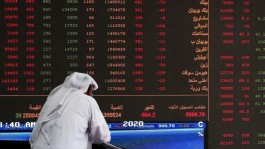

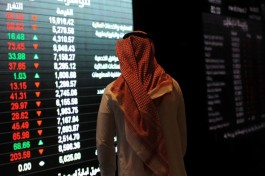

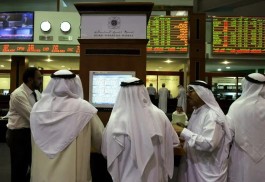


















Major European stock indexes traded in a limited fashion after a long weekend on Tuesday, as investors took some precautions with US President Donald Trump’s midnight deadline for Iran to agree to a ceasefire fast approaching.
By 11:08 (10:08 GMT), the pan-European STOXX 600 index was up 0.1%, Germany's DAX was largely flat, France's CAC 40 was up 0.5%, and Britain's FTSE 100 was up 0.2%. Major European stock markets were largely closed on Monday for a public holiday.
At a press conference, President Trump poured cold water on optimism that Washington and Tehran could reach a brokered ceasefire in their conflict, which has now lasted more than a month. Iran had previously rejected a proposal from the United States and regional mediators that would have temporarily halted the fighting for 45 days and reopened the Strait of Hormuz.
Trump vowed to destroy every bridge and power plant in Iran if the Islamic Republic did not agree by Tuesday night's deadline to a deal that would reopen the Strait of Hormuz – whose de facto closure to tanker traffic has sent oil prices soaring, threatening to drive up inflation and weigh on global growth. About a fifth of the world's oil passes through the waterway off Iran's southern coast.
If new US attacks occur, Trump warned, it will take Iran 100 years to rebuild.
But the aggressive language came with a warning from Trump that a diplomatic solution could be found for the war, which began with joint US and Israeli strikes on Iran in late February.
The fighting has since spread to countries across the Middle East, with Israel in particular targeting Iranian-backed Hezbollah militants in Lebanon. In addition to attacks on Israel and the de facto closure of the Strait of Hormuz, Iran has retaliated with strikes on key energy infrastructure in the Persian Gulf, further exacerbating concerns about the flow of crude oil supplies worldwide.
A number of Asian countries are major importers of energy that passes through the strait, while many European countries use natural gas exports from the Persian Gulf to heat homes and power data centers.
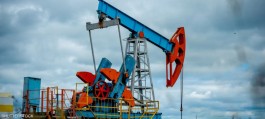
Oil prices rose again. Brent crude futures, the global benchmark, were last trading up 1.4% at $111.28 a barrel, while U.S. West Texas Intermediate crude futures jumped 2.1% to $114.74 a barrel.