

























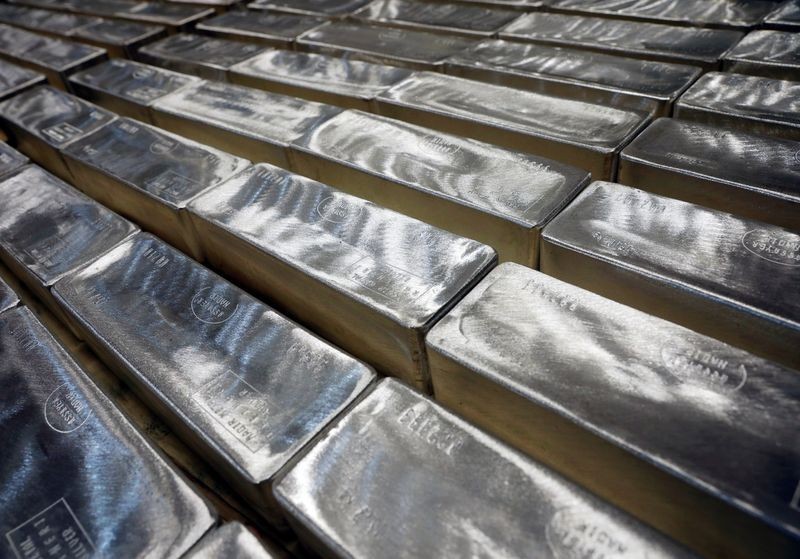


Silver prices rose to a record high, exceeding $80 an ounce, continuing their rapid rise towards the end of the year, supported by speculative trading and persistent structural imbalances between supply and demand.
The price of the white metal rose by as much as 6% on Monday, in a volatile session in which it jumped to $84 an ounce in the early hours of Monday, then fell below the previous closing price, before recovering.
The weakening dollar and escalating geopolitical tensions contributed to boosting the appeal of precious metals during a year-end rally that took silver, gold and platinum prices to record highs.
Tony Sycamore, a market analyst at IG Australia, said: There is no room for error, we are witnessing a historic bubble forming in the silver market.
The rise is due to interest rate cuts and central bank purchases.
The rapid acceleration in silver prices caps a year-long rally in precious metals, driven by increased central bank purchases, inflows into exchange-traded funds, and three consecutive interest rate cuts by the US Federal Reserve.
Low borrowing costs are a supporting factor for these non-yielding commodities, while traders are betting on further interest rate cuts in 2026.
Geopolitical tensions are supporting prices
Over the past week, tensions in Venezuela, where the United States imposed a blockade on oil tankers, and Washington's strikes against ISIS in Nigeria, have boosted the appeal of precious metals as a safe haven.
The Bloomberg Dollar Spot Index, a key measure of the strength of the US currency, also fell 0.8% last week, its biggest weekly decline since June. A weaker dollar typically supports gold and silver prices.
Structural imbalances in the silver market
Silver outperforms gold for several reasons, including its less deep market. Limited stockpiles and liquidity that can quickly evaporate create downward pressure, whereas the London gold market is backed by some $700 billion in bullion that can be lent out in the event of a liquidity crisis—something the silver market lacks. This historic supply crisis occurred in October.
Saikamur said: The main driver recently has been a sharp structural imbalance between supply and demand in the silver market, which has sparked a race to acquire the physical metal. He added: Buyers are currently paying a significant premium of 7% for immediate delivery compared to waiting a year.
Stockpiling shortages and US investigations
London's vaults have seen large inflows since the October crisis, but this has led to shortages elsewhere. In China, silver stocks in warehouses linked to the Shanghai Futures Exchange fell last month to their lowest level since 2015.
Furthermore, a significant portion of the world's available silver remains in New York, as traders await the outcome of a U.S. Department of Commerce investigation into whether imports of critical minerals pose a national security threat. This investigation could pave the way for tariffs or other trade restrictions on the metal.
Industrial uses and future risks
Unlike gold, silver has practical and widely used properties that make it an essential component in many products, such as solar panels, artificial intelligence data centers, and electronics.
With inventories nearing all-time lows, the risk of supply shortages that could affect multiple industries is growing.
This prompted Elon Musk to comment on Saturday in a series of tweets addressing the supply shortage, saying via the X platform: This is not good. Silver is needed in many industrial processes.
Technical indicators and price movements
Technical indicators suggest that the silver rally may be too rapid and overbought. The 14-day Relative Strength Index (RSI) for silver showed a reading close to 80, well above the 70 mark, which signals overbought conditions.
Spot silver rose 1.2% to $80.24 an ounce at midday Singapore time, after hitting a record high of $84.01 earlier in the session.
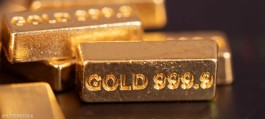
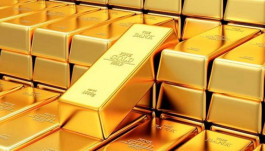
In contrast, gold fell 0.4% to $4,515.20 an ounce, below the record high of $4,549.92 reached on Friday. Platinum prices also declined, and palladium dropped more than 6%, after both metals hit record highs in the previous session.