















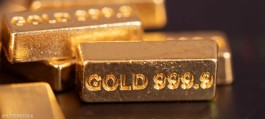













Gold prices fell by nearly 1% during trading on Monday, affected by the rise in the US dollar and the rise in oil prices, while investors awaited US President Donald Trump's decision on a proposal aimed at extending the ceasefire agreement with Iran.
This decline coincided with the rise of the US dollar, which made gold priced in US dollars more expensive for investors dealing in other currencies, thus limiting demand for the precious metal.
Political uncertainty and ongoing geopolitical risks
Tim Waterer, chief market analyst at KCM Trade, said that rising oil prices, along with continued uncertainty surrounding the US-Iran deal, are enough to keep gold volatile and unstable at the start of the week.
Trump had stated on Friday that he would soon make a decision on a proposal aimed at extending the ceasefire with Iran, but indications still show that there are fundamental differences between the two sides on key issues that have been the focus of the conflict in the past period.
Meanwhile, Israeli Prime Minister Benjamin Netanyahu ordered Israeli forces to penetrate deeper into Lebanese territory as part of the confrontation with the Iranian-backed Hezbollah, despite more than six weeks having passed since the ceasefire was declared.
These developments reflect the continuing geopolitical tensions in the region, which adds a new element of uncertainty to global markets.
Oil and inflation are changing the equation of the markets.
Oil prices rose by more than 2% in early trading on Monday, raising fresh concerns about a return of inflationary pressures and the possibility of continued high interest rates or even further increases.
Although gold is traditionally seen as a hedge against inflation, its appeal usually declines in a high interest rate environment, because it does not generate a return for its holders compared to other income-generating assets.
In this context, Michelle Bowman, Vice Chair of the Federal Reserve for Banking Supervision, said on Friday that the economic effects of the war in the Middle East are still being assessed, but they could lead to continued increases in inflation, which may call for a tighter monetary policy.
She added that inflationary risks stemming from the war have become an important factor to consider when determining the future path of US interest rates.
Despite the current pressures, Tim Waterer believes that gold still has a chance to reach $5,500 an ounce by the end of 2026 if supportive conditions are present, most notably a decline in oil prices and a decrease in the value of the US dollar.
He noted that continued strong central bank purchases, along with the growing role of gold as a hedge against geopolitical risks and inflation, are key factors supporting prices in the long term.
Gold at settlement on Friday
Gold futures ended Friday's trading session higher after the US president revealed some details of a potential agreement to end the Middle East conflict with Iran, but still recorded monthly losses.
Gold futures briefly touched $4,627 an ounce during trading, but recorded monthly losses of about 1.5%, despite posting weekly gains of 1%.
The contracts ended Friday's trading at $4,593.0 per ounce, up 1.3%.
Gold now
Spot gold fell 0.4% to $4,518.09 an ounce, after hitting a two-week high in the previous session.
US gold futures for August delivery also fell by 1% to $4,548.90 an ounce.
Other minerals
As for the rest of the precious metals, spot silver rose 0.4% to $75.58 an ounce.
Platinum also rose by 1.1% to $1,937.30 an ounce.
Meanwhile, palladium rose 1.2% to $1,370.50 an ounce, benefiting from improved investor appetite for both industrial and precious metals.