
















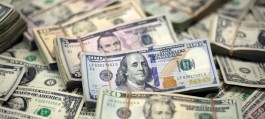
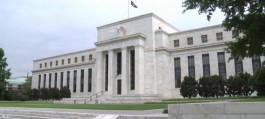





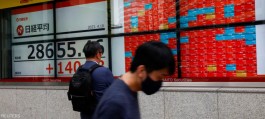

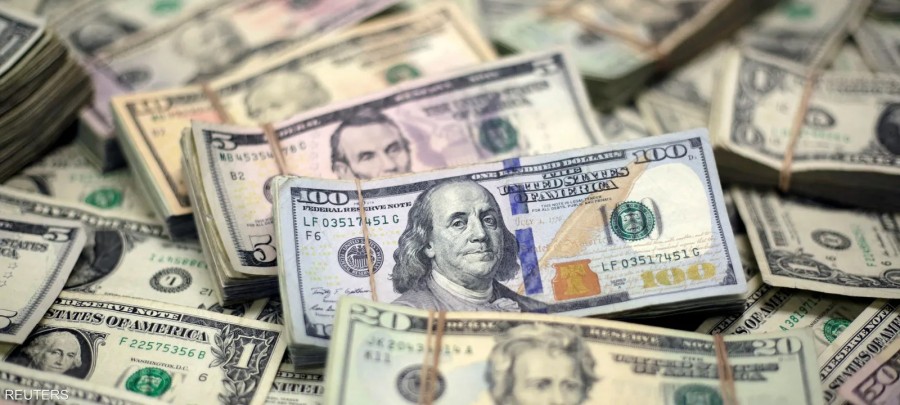
The US dollar held onto its gains on Wednesday, after hitting a two-week high ahead of the Federal Reserve's interest rate decision, while the British pound took center stage for investors awaiting Andy Burnham's first budget, hoping it will not rely too heavily on borrowing.
During trading, the dollar index, which measures the strength of the US currency against a basket of six other currencies, reached its highest level in two weeks at 102.39 points. The yield on the benchmark 10-year US Treasury note also rose by 1.2 basis points to 5.01%.
The week will see a series of monetary policy decisions from central banks around the world, as policymakers balance the future path of interest rates with price pressures stemming from the conflict in the Middle East and the rising costs of sovereign debt.
Expectations of US interest rates remaining unchanged in October
Traders widely expect the Federal Reserve to leave interest rates unchanged, after several central bank officials in recent weeks indicated the need to wait and see more signs of continued price pressures.
However, the CME Group’s FedWatch tool shows that markets are pricing in a 77% probability that the central bank will raise interest rates by at least 25 basis points in December.
The euro settled at $1.1126, trading slightly above its lowest level since May 2025, which it reached earlier this month. Meanwhile, the dollar edged down slightly against the Japanese yen to 157.83 yen.
British budget awaited
Attention was focused on the UK government's budget plans, with Chancellor John Healey expected to reveal details of next year's fiscal spending at 12:30 GMT.
The pound fell 0.2% to $1.328 and also declined by about 0.2% against the euro. In the previous session, the pound had approached its highest level against the single European currency in 17 months.
Investors are watching closely to see how the government plans to increase revenue, amid analysts' expectations of taxes on banks, gambling companies, and online marketplaces.
However, amid increasing scrutiny of government debt levels, the heavy reliance on borrowing could trigger a sell-off of the currency and British government bonds, similar to the turmoil seen in the markets during former Prime Minister Liz Truss’s “mini-budget” in 2022.
Canadian interest rate hike anticipated, New Zealand dollar weakens
Later on Wednesday, the Bank of Canada was expected to raise its key interest rate by at least 25 basis points, in a preemptive move aimed at preventing inflation caused by higher energy prices from spreading to the rest of the economy.
The Canadian dollar held steady against its US counterpart at around 1.406 Canadian dollars per US dollar.
The European Central Bank and the Bank of Japan are also expected to announce their monetary policy decisions on Thursday and Friday respectively, with expectations that both central banks will keep interest rates unchanged.
In New Zealand, the New Zealand dollar fell as much as 1.4% to $0.5598 after the Reserve Bank of New Zealand kept interest rates at 2.75%, a move that defied the expectations of the vast majority of economists who had predicted a rate hike.

UAE's Mubadala leads a $400 million financing round for German insurance company Wefox
Wefox, an insurance technology company founded by former emp.. Read more

Saudi Arabian Centers distributes dividends to shareholders for the second half of 2022 with a total of 356.25 million riyals
Arabian Centers Company has approved the distribution of cas.. Read more

The largest sovereign funds: "Abu Dhabi Investment Authority" advances to third place globally, with assets of $708.8 billion
The Abu Dhabi Investment Authority has advanced to the third.. Read more
Accumulated losses place Emirati companies on the "second category" screen, pending anonymity
Special Report - (Namazone): A group of companies listed.. Read more

Details 142 Saudi initiative to face the consequences of "Corona" B214 billion riyals
Special Report (Nmazzon): The government announced that.. Read more

Will gold remain a safe haven asset?
Gold has long been a source of controversy and contention am.. Read more
Global trade is expected to decline in the coming months
The economics department of Qatar National Bank (QNB) said t.. Read more

Analysis .. How will major central banks respond to the increasing cases of financial instability?
The global macroeconomic environment is experiencing some of.. Read more

The euro is below the dollar .. the lowest level in 20 years
For the first time in 20 years, the euro fell below $1 on Tu.. Read more

"OPEC"...The pressures of supply shortage will continue next year
OPEC expected global demand for oil to increase next year, b.. Read more
The dollar stabilizes ahead of the Federal Reserve decision and focus shifts to the British budget.

NamaaZone " The Power of Knowledge"


Analysis Service |
Its a free service for technical consultation provided by NamaaZone to the website visitors. |
Open account Request |
NamaaZone provides a range of integrated trading solutions in local and global financial markets |