

































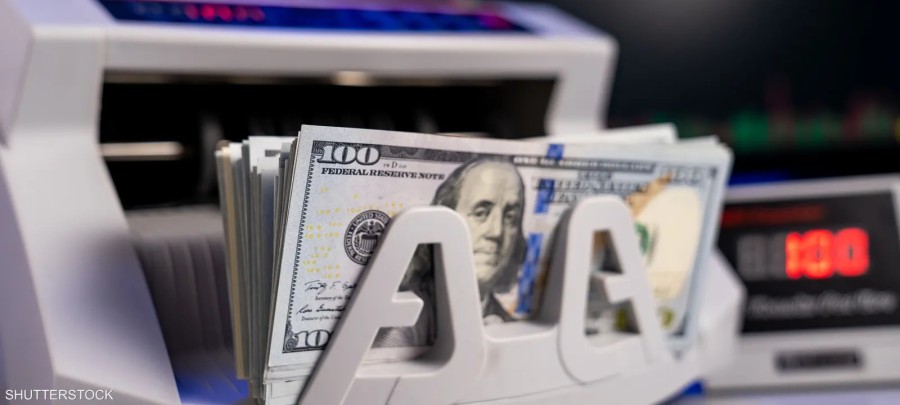


The US dollar held steady near its lowest levels since early March against major currencies on Thursday, as growing optimism about a possible peace deal with Iran boosted investor sentiment and prompted them to abandon safe-haven assets.
US President Donald Trump indicated that the war between the United States and Israel on one side and Iran on the other is nearing its end, while the White House expressed optimism about the possibility of reaching an agreement, suggesting that new rounds of direct negotiations will be held in Pakistan.
In this context, Trump increased optimism by announcing that direct talks between Israel and Lebanon would be held the following day, in an attempt to end the fighting, which had been one of the main points of contention in previous rounds of negotiations.
Major currencies rise, dollar index falls
The euro briefly rose above $1.18, heading for its ninth consecutive session of gains, while the pound traded at $1.3584, up about 0.2% on the day.
The two currencies stabilized near their highest levels since before the outbreak of war with Iran in February, reflecting a shift in market trends.
In contrast, the dollar index, which measures the performance of the US currency against a basket of six major currencies, settled at 97.969, after declining for eight consecutive sessions, giving up most of the gains it had made at the start of the war.
End-of-war pricing and additional pressure on the dollar
Khun Goh, head of Asia research at ANZ Bank, explained that markets have begun to move beyond the impact of the war and are pricing in a scenario of reaching a political settlement.
He noted that the decline in the war-related risk premium could lead to further pressure on the dollar, with the possibility of a resumption of the downward trend that began last year.
He added that if the dollar index breaks below the 98 level, which represents an important support level in the near term, it could open the door to further declines, especially with the index falling by 0.7% during the week, on its way to recording its second consecutive weekly loss.
Strong movements in Asian currencies
The Chinese yuan was steady in offshore trading at 6.8152 against the dollar, near its highest level in three years, while in the domestic market it reached 6.8174.
Data showed that the Chinese economy grew by 5.0% during the first quarter, exceeding expectations, supported by strong exports and stimulus policies, despite a slowdown in retail sales.
In this context, the yuan has risen 2.5% against the dollar since the beginning of the year, driven by increased exports and companies converting their dollar holdings into the local currency.
Christopher Wong, market strategist at OCBC Bank, noted that the yuan's stability is likely to continue, and that it is one of the best-performing currencies since the start of the war, even outperforming the dollar.
He predicted that the Chinese currency would continue to rise gradually and in a measured way in the coming period.
Australian dollar rises and Japanese yen moves
Meanwhile, the Australian dollar rose to a four-year high of $0.7197, while the New Zealand dollar approached a one-month high of $0.5916.
Australian employment data came in line with expectations in March, reinforcing market bets on a 70% probability that the Reserve Bank of Australia will raise interest rates for the third time this year in May.
In Japan, the yen rose to 158.71 against the dollar, following comments by the Japanese finance minister regarding an agreement with the United States to intensify coordination on exchange rates.