










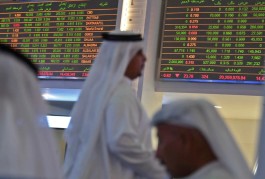





















European stocks held steady on Monday, opening the week under mounting pressure, as escalating military tensions in the Arabian Gulf and the European Central Bank's upcoming monetary policy meeting kept investors off the brink of bold bets.
The pan-European STOXX 600 index fell 0.1%, hovering near its lowest level in several weeks, as trading markets absorbed a fresh wave of geopolitical friction at one of the world's most vital shipping lanes.
Major regional indices struggled to build positive momentum, with both Germany’s DAX and France’s CAC 40 moving in narrow ranges, as investors weighed rising energy input costs against expectations of continued interest rate hikes.
Market sentiment turned cautious after Iranian authorities indicated their intention to declare a restricted zone outside the Strait of Hormuz in the coming days. This announcement comes as a direct response to US strikes that targeted and disabled three Iranian oil tankers over the weekend, which Washington described as retaliation for a ballistic missile attack by Iran's Islamic Revolutionary Guard Corps (IRGC) on two US warships in the region.
Military friction pushed benchmark oil prices up an additional 1% on Monday, adding to a massive weekly rally of nearly 10%, which pushed Brent crude steadily above $90.00 a barrel.
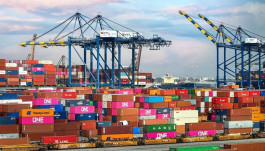
The prospect of a prolonged naval blockade or transit restrictions in the Strait of Hormuz threatens to cut nearly 20% of global seaborne oil and gas flows, raising fresh fears of a cost-driven stagflationary shock to European industrial supply chains.
The impending European interest rate hike is keeping bond yields high.
In addition to geopolitical frictions, European equity valuation multiples faced continued pressure from fixed-income markets, in the immediate horizon of the European Central Bank's monetary policy meeting scheduled for Thursday.
Financial markets have almost fully priced in a 25-basis-point interest rate hike by President Christine Lagarde and the Governing Council, in light of preliminary data for August showing the Eurozone's consumer price index accelerating to 3.3% on the back of a 14.3% rise in energy components.
This fully priced hawkish stance has kept sovereign bond yields high across the continent, with German 10-year bond yields hovering near their highest levels in years, squeezing equity risk premiums and raising debt refinancing costs in interest-rate-sensitive sectors such as real estate, construction, and long-term growth stocks.
The crucial US Consumer Price Index report sets the Federal Reserve's course.
In addition to the policies of local central banks, global stock markets are keenly awaiting the highly anticipated US Consumer Price Index (CPI) report, due later this week.
Following last Friday’s stronger-than-expected U.S. non-farm payrolls report – which showed 162,000 jobs added in August – investors see the inflation reading as the key catalyst that will determine whether the Federal Reserve can raise interest rates at the FOMC meeting scheduled for September 15-16.
If the consumer price index reading comes in high, it will reinforce tight pricing across global interest rate curves, while any sign of easing price pressures will provide vital relief to battered stock markets.