








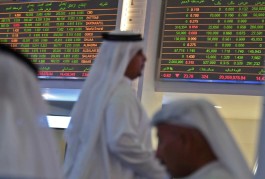

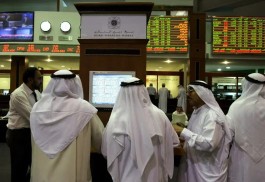


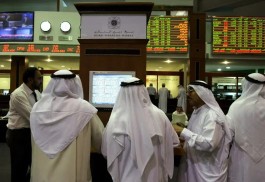

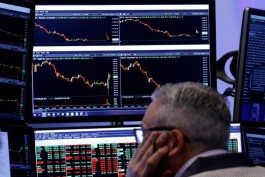
















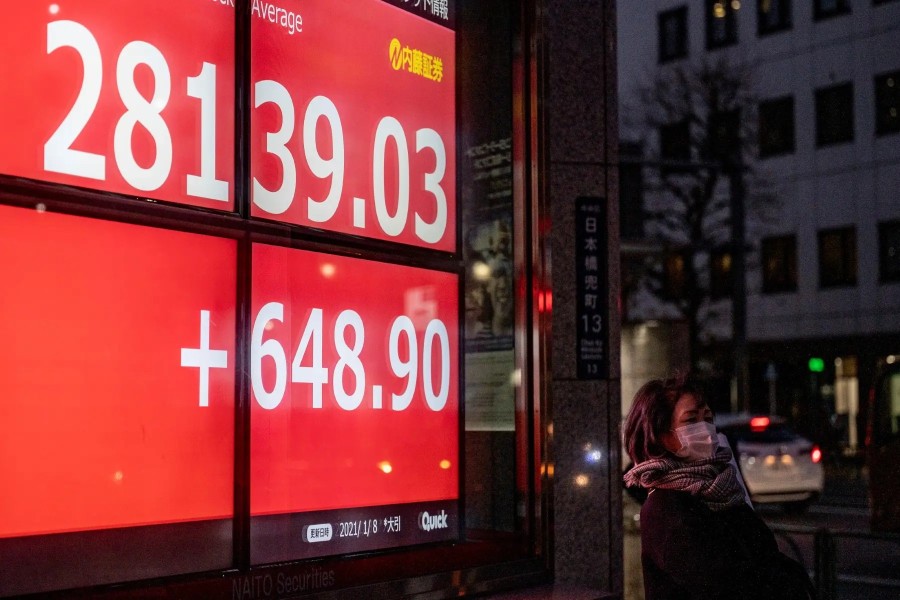


Asian stocks rose, tracking gains on Wall Street, as data showing the US economy grew at its fastest pace in two years boosted expectations for corporate earnings. The dollar weakened, hovering near levels last seen in September.
MSCI's Asia Pacific regional index extended its gains for a fourth straight day, rising 0.2%, with technology stocks leading the way. Australian shares edged lower in a shortened trading session. This followed a fourth consecutive day of gains for the S&P 500, with a tech-heavy index climbing nearly 1% amid thin trading volumes ahead of the Christmas holiday.
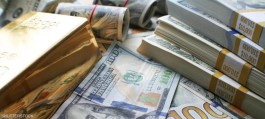
The movements were most pronounced in the commodities market, with gold surging to a record high above $4,500 an ounce before retreating slightly. Gold's safe-haven appeal has been bolstered recently by Washington's blockade of oil tankers linked to Venezuela. Platinum and silver prices also reached record highs, while copper surpassed $12,000 a ton for the first time.
Risk appetite is strong ahead of the end of the year.
Risk appetite remained strong toward the end of the year, with demand for technology stocks continuing even as robust US growth data dampened bets on imminent Federal Reserve easing. After earlier concerns about high valuations and the billions flowing into artificial intelligence, traders are regaining confidence that companies will deliver strong earnings growth through 2026.
Brett Kenwell of eToro said: “If consumers remain resilient through the holiday season and the fourth quarter, it will be a positive indicator for US GDP and corporate earnings.” He added that earnings have continued to exceed expectations, and optimists hope this trend will continue into 2026.
The inflation-adjusted U.S. gross domestic product expanded in the third quarter at an annualized rate of 4.3%, higher than all but one estimate in a Bloomberg survey.
The economy maintained its momentum through mid-year as consumer spending remained strong and the steepest tariffs imposed by US President Donald Trump were rolled back. While the US government shutdown in October and November is expected to negatively impact fourth-quarter growth, economists anticipate a modest recovery in 2026.
Currencies, bonds, and monetary policy
Attention in Asia was also focused on the currency market. The yuan continued its gains, nearing the 7 yuan-to-the-dollar level, after the People's Bank of China set a stronger exchange rate. The yen rose for a third day, as traders remained on the lookout for signs of government intervention following Tokyo's warning against excessive movements.
The South Korean won strengthened after authorities warned against excessive currency weakness. The escalating rhetoric comes as the currency approached the psychologically significant level of 1,500 to the dollar, a level not surpassed since the 1997 global financial and Asian currency crisis.
Separately, the Reserve Bank of India announced new measures aimed at boosting banking liquidity by purchasing government bonds and conducting foreign exchange swaps to support the weak rupee, which has emerged as the worst-performing currency in Asia this year.
U.S. Treasury yields were steady on Wednesday, while the Bloomberg Dollar Index continued its decline for a third straight day. The dollar is on track for its worst annual performance in eight years, and the options market suggests traders are preparing for further losses in the final sessions of 2025 and beyond.
Historically, the day after Christmas has been consistently the most positive for stocks, according to Bespoke Investment Group. In the 39 years since 1953, when markets opened on December 26, the S&P 500 has declined only six times.
Kieran Calder, head of equity research at UBB, said in an interview with Bloomberg Television: We are set for a year-end rally, adding that the market is reacting positively to some of the data.
Trump expects the next Fed chair to cut interest rates
At the same time, Trump said he expects the Federal Reserve chairman to cut interest rates if the market is performing well, in the latest indication of the president's desire to appoint a nominee committed to lowering borrowing costs as he nears announcing his choice to succeed Jerome Powell.
In another context, Treasury Secretary Scott Bisent endorsed the idea of reconsidering the Federal Reserve's 2% inflation target, once the United States succeeds in sustainably reducing the rate of price increases to that level.
Financial markets see a probability of less than 20% for an interest rate cut by the Federal Reserve in January.
Eric Thiel of Comerica Wealth Management said the economy is showing a moderate scenario, with U.S. economic growth exceeding potential, inflation declining but remaining high, and a less robust labor market.
He added: The Federal Reserve is likely to maintain an accommodative stance, which may increase with the appointment of a new Fed chair next year.