




































Asian stocks extended their rally to a new record high, fueled by a faster recovery in US technology stocks on Wall Street, which eased pressure on markets after concerns raised by the massive pace of spending on artificial intelligence.
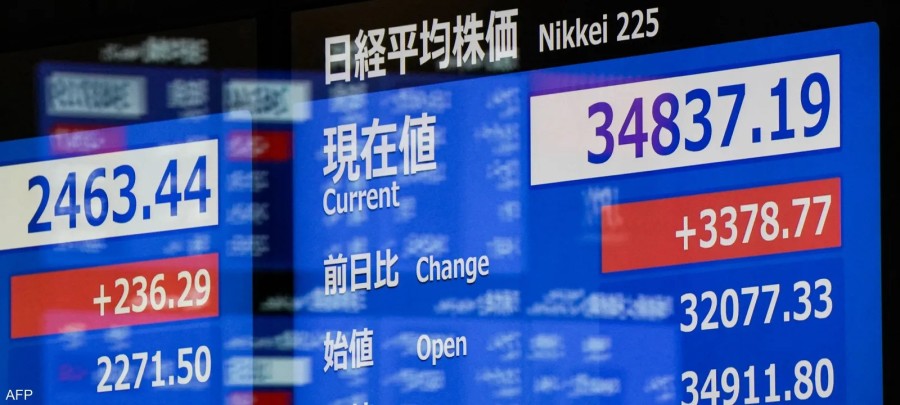
The MSCI Asia Pacific index rose 1.3%, with technology stocks, including SoftBank and TSMC, leading the gains. Japan's Nikkei 225 also extended its election-fueled rally, climbing 2.8% to a record high. This followed the S&P 500 closing near a record high on Monday, as some of the hardest-hit stocks in last week's sell-off recovered.
In contrast, the yuan jumped to its strongest level since May 2023 after reports that China had asked banks to reduce their holdings of US Treasury bonds. The dollar stabilized after two days of declines, while gold and silver prices edged lower, though precious metals and stocks have still posted gains for the year.
Ebbing anxiety about artificial intelligence
The stock gains reflected easing concerns about the artificial intelligence sector, which had peaked over the past two weeks, hitting software companies and casting a shadow over high-spending technology firms.
Meanwhile, traders are preparing for the release of important US economic data that could reshape expectations for the Federal Reserve's interest rate path.
Tarek Harashani, head of primary brokerage trading at Maybank Securities in Singapore, said: “Most importantly, the recent volatility has already removed a lot of the excessive momentum, particularly in highly valued technology and AI stocks.”
He added: “Investors’ positions are cleaner, risk premiums look more reasonable, and markets are entering this phase from a healthier base,” noting that if the upcoming US economic data is supportive, even without an imminent interest rate cut, Asian stocks look well-positioned to continue rising.
Huge technological spending and increasing funding
In a further indication of the scale of spending by technology companies, Alphabet is poised to raise $20 billion from a dollar-denominated bond offering, exceeding expectations of $15 billion, along with marketing its first-ever issuances in both Switzerland and the United Kingdom, including a rare 100-year bond in the British market.
As other computing giants ramp up their spending, the capital expenditures of the four largest U.S. technology companies are expected to reach about $650 billion in 2026, driving a funding and technology boom that could radically reshape the global economy.
Among the biggest winners in US technology stocks was Oracle, whose shares jumped 9.6%, helping to calm concerns about the threats that artificial intelligence poses to the company's business.
Chris Weston, head of research at Pepperstone, wrote in a note: “The question remains whether the market is reassessing its positioning in value sectors within the stock market, and whether software is now seen as more than just a short-term bargain, and whether investors are repositioning themselves in core AI stocks.”
China and diversifying reserves away from the dollar
For his part, Garfield Reynolds, leader of the Bloomberg Markets Live team, believes that negative factors for the dollar are accumulating, as China's warnings to its banks to curb their holdings of US Treasury bonds serve as a new reminder of the reasons for the decline in the attractiveness of US assets compared to the past.
In China, the currency's rise comes amid a broader trend of diversifying investments away from US sovereign debt, reinforcing a wider global trend of reducing reliance on the dollar. This could accelerate the redirection of capital towards Chinese assets, providing crucial support for the yuan.
In other news, the yen fluctuated on Tuesday, settling near 156, following Prime Minister Sanae Takaichi's historic election victory over the weekend. Meanwhile, Bitcoin fluctuated near the $70,000 level.
Anticipate crucial US data
This week, the markets are focused on an intense series of US economic data releases, including the two most important readings: employment and inflation.
The jobs report, due Wednesday, is expected to show the addition of 68,000 jobs in January, with the unemployment rate holding steady at 4.4%. The data will also include historical revisions that are expected to show a significant downward revision in job numbers for the year ending March 2025.
In Friday's consumer price index report, economists will be looking for further signs of easing inflation. Prior to that, Tuesday's retail sales data is expected to show strong performance.
Interest trajectory under the microscope
This data could help shape market expectations regarding the Federal Reserve's next move. Traders widely anticipate that policymakers will leave interest rates unchanged at their meeting next month, as they did in January when they kept them in the 3.5% to 3.75% range.
U.S. Treasury yields fell on Monday after comments by National Economic Council Chairman Kevin Hassett, who said U.S. employment figures are likely to decline in the coming months as population growth slows.
Angelo Korkavas of Edward Jones said that a stable labor market, characterized by moderate hiring and limited layoffs, would help the Federal Reserve stay on track to cut interest rates once or twice this year, assuming price pressures continue to ease.