







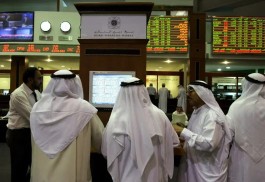
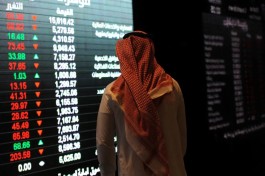
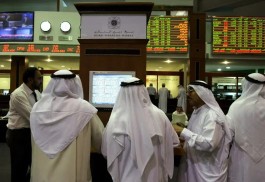
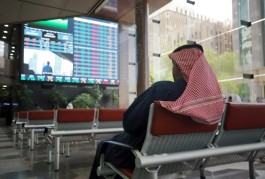
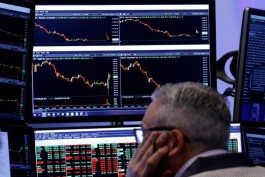
















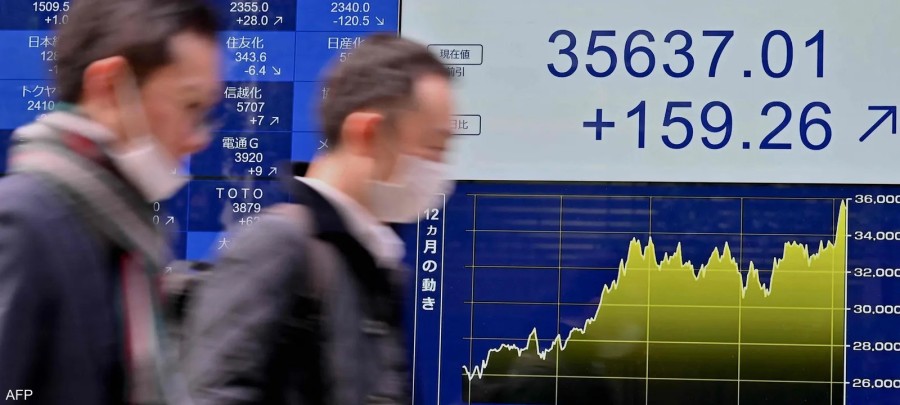


Asian stocks fell for a fourth day as rising inflation fears fueled a surge in global bond yields, prompting investors to reassess prices after a record rally.
The MSCI regional stock index fell 1%, with technology stocks among the biggest losers. South Korean stocks, a key gauge of artificial intelligence investment, declined 1.9%, with chipmaker SK Hynix Inc. and Samsung Electronics Co. among the biggest drags on the index.
Although Brent crude was slightly weaker, it remained above $110 a barrel, with no sign of de-escalation in the Iranian conflict. This fueled inflation fears, putting pressure on government bonds globally.
On Tuesday, yields on 30-year Treasury bonds climbed to levels not seen since 2007, amid concerns that high energy costs will push the Federal Reserve to raise interest rates rather than lower them.
Global stocks have retreated from their all-time highs, after investors spent weeks ignoring concerns about war in the Middle East, fueled by optimism that spending on artificial intelligence will continue to feed corporate profit growth.
Attention now turns to Nvidia Corp.'s results on Wednesday, with investors increasingly wondering whether the AI-driven rally has gone too far and too fast.
Bond yields are putting pressure on stock valuations.
Kazunori Tatebe, chief strategist at Daiwa Asset Management, said the recent rise in yields is a negative trend driven by inflation fears stemming from Middle East tensions.
He added that, unlike a positive rise in returns supported by a strong economy, which would boost corporate profits, when returns rise for negative reasons, it tends to put pressure not only on growth stocks, but on stocks in general.
The 30-year yield rose one basis point on Wednesday to 5.19%, while the 10-year yield was little changed at 4.67%.
Elsewhere in the market, the Bloomberg Dollar Spot Index held steady at its highest level in six weeks, while gold, a non-yielding asset, was little changed near $4,500 an ounce.
Matt Malley of Miller Tabak said: The issue of rising bond yields remains something that could create problems for today's highly valued stock market.
G7 pledges fiscal prudence
At the same time, G7 finance ministers pledged not to overdo any financial support, as Iran’s war raises the risks of growth and inflation to the global economy.
In a statement issued in Paris on Tuesday at the conclusion of meetings overshadowed by sovereign bond volatility in most of the wealthy economies' club, officials committed to a measured approach that would not stretch public finances too far.
In a related context, the European Union accelerated the start of work on the trade agreement with the United States.
Tatiana Darry, a macro strategist at Bloomberg Markets Live, said the jump in Treasury yields reduces the return on risk for major U.S. stocks, further weakening their appeal.
On the geopolitical front, President Donald Trump threatened to resume strikes on Iran in the coming days as part of his push for an agreement to end the war. Meanwhile, NATO is discussing the possibility of assisting ships to pass through the Strait of Hormuz if the vital waterway is not reopened by early July.
Nvidia is testing the wave of artificial intelligence
In Asia, Russian President Vladimir Putin arrived in Beijing late Tuesday, aiming to strengthen ties with Chinese leader Xi Jinping and make progress on a long-stalled energy project. Meanwhile, Singapore overtook Indonesia to become Southeast Asia's largest stock market.
The focus will then shift to Nvidia's results after the closing bell on Wednesday. The chip giant's earnings will be of even greater importance at a time when the market is facing renewed concerns about rising bond yields and the possibility of interest rate hikes, according to Paul Stanley of Granite Bay Wealth Management.
He said: “Investors need some reassurance that the AI story is alive and well, and that the company is generating enough revenue growth to support its high valuation.” He added: “We believe Nvidia will announce financial results that justify its valuation, and that’s exactly what the stock market is looking for.”