



















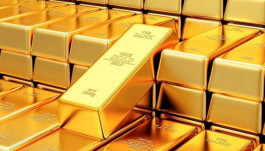

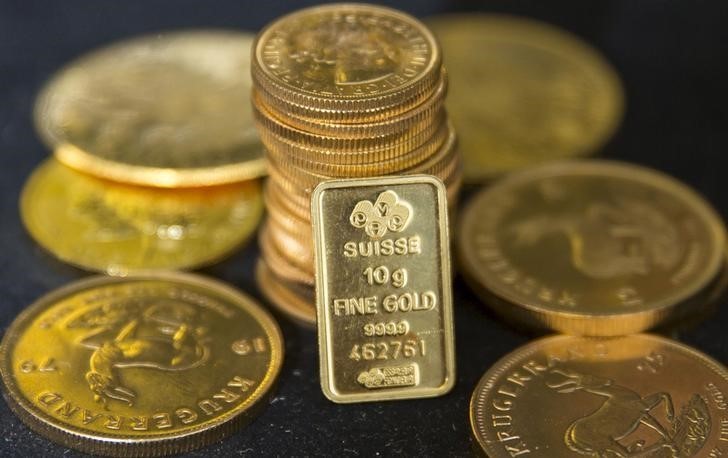


Gold stabilized after two days of gains, as traders assessed the prospects for a diplomatic solution to the Iran war, even as sporadic clashes threatened to undermine a fragile ceasefire.
Bullion was near $4,715 an ounce, after rising 1.5% during the previous two sessions.
The White House said the United States would hold direct talks with Iran, while Tehran considered the Israeli attacks on Lebanon a violation of the ceasefire that had only been in place for a day, and continued to launch strikes in the region. The Strait of Hormuz remained largely closed despite Iranian pledges to guarantee safe passage.
Oil rebounded after its biggest daily drop since April 2020, while stocks rose and the dollar index fell on Wednesday, supporting gold, which is priced in the US currency.
Gold has traded largely in parallel with stocks since the war began about six weeks ago, as its appeal as a safe haven has diminished for some investors who have had to cover their losses elsewhere.
Analysts at Standard Chartered, including Emily Ashford, wrote in a note that gold's role as a liquidity provider, rather than as a portfolio diversification tool or safe haven, remains paramount. They added that the recovery appears fragile in the short term, suggesting that bullion is likely to find greater support in the physical market.
Inflation and monetary policy determine the direction
The war, now in its second month, has led to higher energy prices and increased inflation risks, raising the likelihood that central banks will postpone interest rate cuts or even raise them. This is a negative factor for gold, which does not offer interest and benefits when borrowing costs are low.
Conversely, a prolonged war could also lead to slower growth, harming the US labor market and prompting a reduction in interest rates.
Minutes from the Federal Reserve's Open Market Committee meeting on March 17 and 18, released on Wednesday, showed policymakers weighing up these divergent scenarios for the U.S. economy.
James Locke, senior portfolio manager at Schroder Investment Management, said: “Once the short-term sell-off subsides, gold will gradually find its way up, even if the crisis is prolonged.” He added that the metal will continue to receive support from what is known as “currency erosion trading,” driven by financial concerns and the need to hedge against the US dollar.
Spot gold fell 0.1% to $4,714.20 an ounce at 11:33 a.m. Singapore time. Silver declined 0.3% to $73.93. Platinum and palladium also fell. The Bloomberg Dollar Index rose 0.1% after ending the previous session down 0.8%.