

















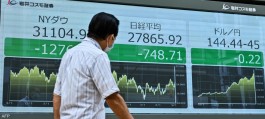

















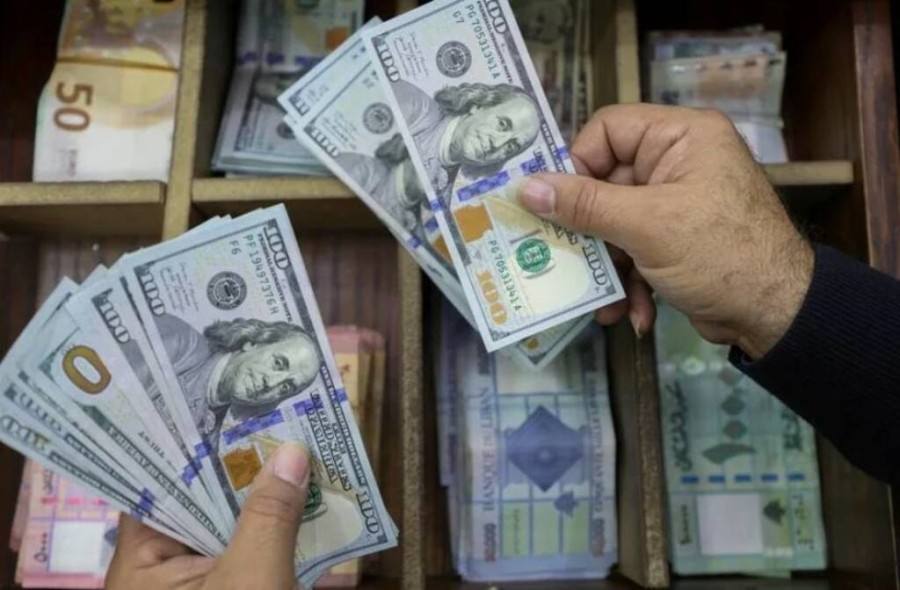


The dollar approached its lowest level in nearly seven months during trading on Wednesday, while the Japanese yen continued to make gains, as traders awaited the U.S. Treasury Department's announcement on its bond-buying program, along with anticipated inflation data later this week.
The spot dollar index fell as much as 0.2% on Wednesday, nearing its lowest level since February 18. Much of the decline was driven by a stronger Japanese yen, the index's second-largest component.
The Japanese currency rose 0.5%, extending its gains since the beginning of the month to about 4%, amid continued pressure on the dollar and a shift in traders' attention to monetary and fiscal policy in the United States and Japan.
The dollar came under renewed pressure after U.S. Treasury Secretary Scott Bessent challenged traders to test his resolve to strengthen the yen, saying that when he currently makes market predictions, he does so based on inside information.
Bisent intensifies pressure on markets
Bisent's remarks are among his most strident to date in an extraordinary campaign aimed at pushing markets in the direction the US administration wants, particularly with regard to the yen exchange rate and bond yields.
Bessent is also scheduled to reveal the scale of the move the U.S. Treasury Department is initially willing to take to curb U.S. bond yields by expanding its bond repurchase program.
The Treasury Department is expected to announce later on Wednesday the size of the operation planned for the following day to repurchase outstanding bonds with maturities ranging between 10 and 20 years.
Mohit Kumar, chief economist and strategist for Europe at Jefferies International, said the Treasury would need to implement an operation worth more than $4 billion in order to have a noticeable impact on the market.
He added that it would not be surprising if the first transaction came in at a much larger size, perhaps between $8 billion and $10 billion.
Markets are awaiting the size of the bond buyback program.
However, researchers at JPMorgan Chase believe the U.S. Treasury may not disclose the maximum size of the repurchase operation, meaning investors may have to wait for more details to assess the potential size of the intervention and its impact on the bond market.
This comes at a time when investors are trying to assess the extent to which the expanded repurchase program can affect long-term bond yields, especially with US borrowing costs rising recently.
Traders are also looking ahead to US inflation data due on Friday, which could help shape market expectations regarding the Federal Reserve's decision at its meeting next week.
Financial markets are currently pricing in a roughly 60% probability of the US Federal Reserve raising interest rates by 25 basis points, making the upcoming inflation data an important factor in determining whether these expectations will be strengthened or weakened.
Inflation and oil present the dollar with a complex equation.
Options market indicators suggest that traders are still generally bearish on the dollar in the short term, although there is room for the US currency to make gains against the euro and the British pound.
This is partly because high energy prices are putting particular pressure on the euro and the British pound, given that the economies of Europe and Britain are heavily affected by energy costs.
Brent crude climbed to $100 a barrel on Wednesday, amid escalating attacks between the United States and Iran, raising concerns about the impact of higher energy prices on inflation, growth, and monetary policy.
The dollar is thus facing a complex set of factors. On the one hand, the yen's gains, inflation data expectations, and the bond repurchase program are putting pressure on the US currency, while rising energy prices may provide some support against the euro and the British pound if high inflation leads to a tightening of monetary policy in major economies.