






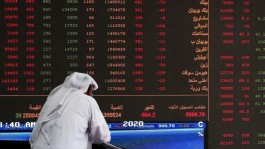

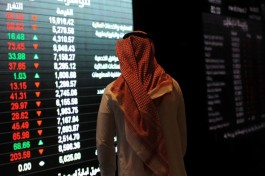

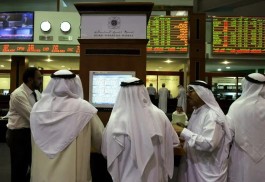

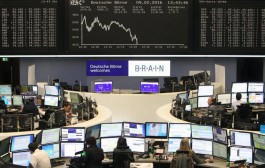















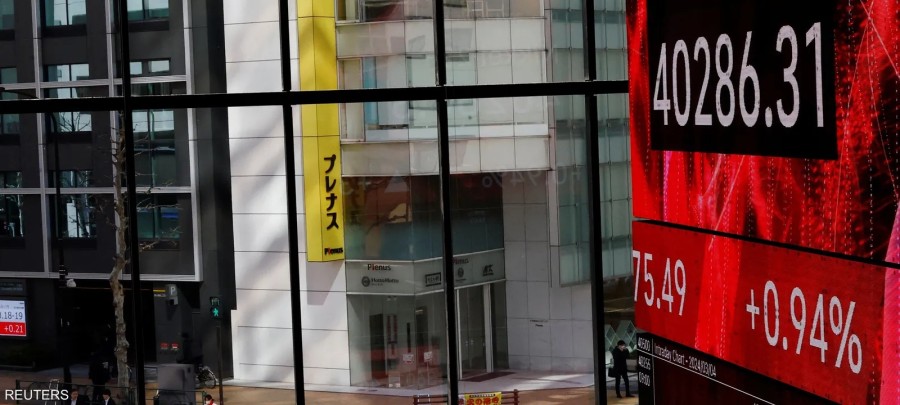


Asian stocks extended their gains for a fourth day as turmoil over concerns about the impact of artificial intelligence subsided, amid optimism tempered by a lukewarm reaction to Nvidia's positive sales forecast.
The MSCI Asia Pacific Index rose 0.8% to a new record high, although the market performed poorly, with decliners outnumbering gainers.
South Korea’s Kospi index, which tracks artificial intelligence investments, continued its global best performance, rising 2% and reinforcing its position as the world’s best performing stock market this year.
Nvidia's stock gave up most of its gains after the earnings announcement, settling for a modest 0.2% rise in after-hours trading, even though the chipmaker's first-quarter revenue forecast beat estimates.
The world's most valuable company cited concerns about the booming artificial intelligence economy, weighing on shares of several Asian chipmakers. Futures for the tech-heavy Nasdaq 100 index fell 0.3%.
High ratings and concerns about competition
Dellen Wu, research strategist at Pepperstone Group, said that traders' expectations for Nvidia were already largely priced in, leaving limited room for further upside.
He added that while Nvidia emphasized strong growth in demand for AI computing and temporarily solid profit margins, the potential threat to market share from proprietary chips has not been fully addressed.
Nvidia's failure to impress investors is expected to test traders after stock markets recovered from Monday's slump, which stemmed from concerns about AI-led disruptions across various sectors and worries that valuations had overestimated fundamentals.
In contrast, Asia largely avoided the volatility, with traders snapping up shares of the region's chipmakers, which form key infrastructure in the artificial intelligence supply chain.
Currency, commodity, and tariff movements
Elsewhere in the market, the dollar weakened for a second day. Gold rose as traders assessed geopolitical tensions in the Middle East and the impact of US tariffs on global trade.
Bitcoin fell by 1%, while Treasury bonds rose, with the yield on the benchmark 10-year bond dropping by one basis point to 4.04%.
In a separate development, U.S. Trade Representative Jameson Greer said that President Donald Trump will sign a directive in the coming days raising global tariffs to 15% where appropriate, and seeks to maintain trade relations that have reached agreements.
The market demands more than just excellent.
Returning to Nvidia, after a remarkable run of sales growth that made the chipmaker the most valuable company in the world, satisfying investors has become more difficult.
Nvidia indicated that concerns about the bloated artificial intelligence economy will continue to haunt the company.
Although Wall Street’s average estimate was $72.8 billion, some analysts predicted figures closer to $80 billion, according to data compiled by Bloomberg.
Hebei Chen, senior market analyst at Vantage Global Prime, said Nvidia's strong earnings should provide Asia, particularly AI-related names in Japan, Korea and Taiwan, with a strong floor and a welcome dose of relief.
She added: The stock's volatility after the close shows that the market is now trading on an excellent basis, calling for renewed acceleration, not just confirmation.
For her part, Bloomberg strategist Tatiana Dray noted that Nvidia's highly anticipated results were strong, but some Wall Street analysts were disappointed by the lack of detail regarding the outlook and what is driving it.
She added: While this may alleviate some of the anxiety associated with artificial intelligence, concerns about competition and the sustainability of infrastructure investments will persist.
hypersensitivity in the markets
Investors have been so sensitive in recent days that a report from a little-known firm called Citriny Research, outlining the potential risks of artificial intelligence to various industries using hypothetical future scenarios, shook the markets earlier this week.
The potentially disruptive nature of the technology has led to stock market volatility across several sectors for weeks, in what has become known as the AI fear bargain.
A Wolf Research survey indicates that most investors believe the disruptive impact of artificial intelligence on markets is greatly exaggerated, according to Chris Sinek. However, participants felt that the strategy of expanding investment remains viable.
Yugo Tsuboi, chief strategist at Daiwa Securities, said: “It has become somewhat more difficult for money to flow back into the sector in the way it did last year.”
He added: In the end, Nvidia's results alone did not dispel concerns about overinvestment and its sustainability.