






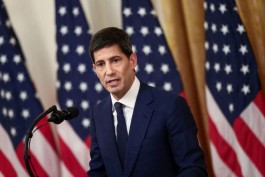




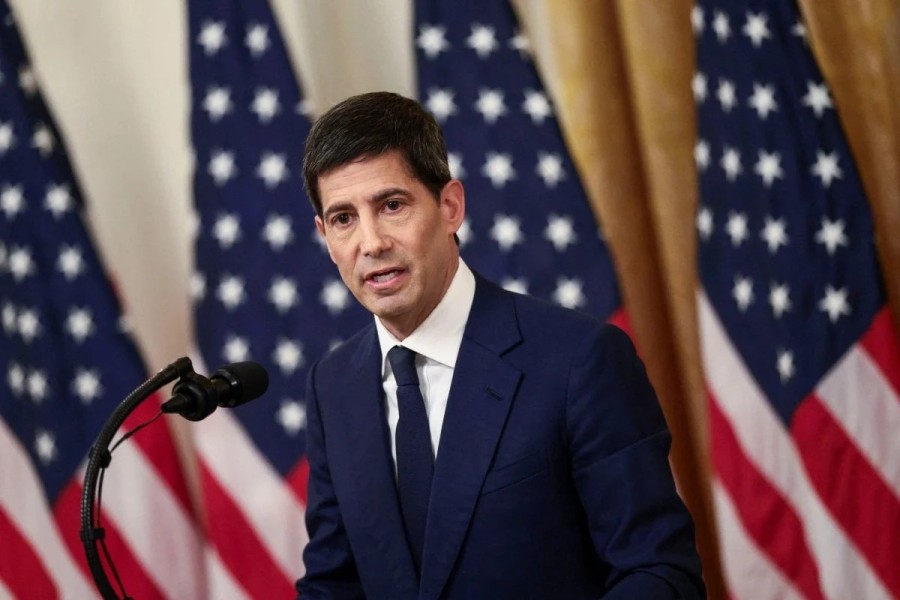


When Kevin Warsh was sworn in during a ceremony at the White House in May, U.S. President Donald Trump praised the Federal Reserve chairman he had handpicked and encouraged him to be completely independent.
He told him: Do what you see fit.
The leeway granted by the president to Warsh will be tested this week, as the Federal Reserve faces mounting pressure to raise interest rates to curb soaring inflation. Last Friday's consumer price report showed that so-called core inflation rose more than expected in August, pushing the probability of a rate hike at the Fed's September 15-16 meeting to over 85%, according to futures pricing.
Trump pressure
This puts Warsh on a collision course with the US president, who has repeatedly pressured the central bank to lower interest rates. Trump recently threatened to escalate trade wars if monetary policy is not eased, and yesterday reiterated his position that borrowing costs in the United States should be the lowest in the world.
When asked whether he expected the central bank to raise interest rates at its next meeting, Trump said: I don't know.
Pressure to ease monetary policy is intensifying due to political turmoil within the White House. Ahead of the US midterm elections, polls showed growing voter discontent with the rising cost of living. A cut in interest rates, even if it takes months for mortgage payments or credit card bills to roll in, could give Trump an opportunity to signal an economic recovery and deflect blame from his administration.
This equation puts Warsh in an institutional bind just weeks before voters head to the polls.
“They are already in a no-win situation,” said Maurice Obstfeld, a senior fellow at the Peterson Institute for International Economics and a former chief economist at the International Monetary Fund. “They either anger the president or undermine their credibility in the markets, which could have more serious consequences for inflation in the future. I don’t think Warsh wants to be remembered as the Fed chairman who caved to the administration’s pressure when the bank’s mission was at stake.”
Since the release of the new inflation report, a White House official has sent mixed signals about how the president might handle raising interest rates.
Kevin Hassett, director of the National Economic Council, told Bloomberg Television last Friday that Trump still wants to lower interest rates, adding that if the Fed raises them, the president will have something to say about it.
But Hassett softened his stance somewhat yesterday.
He said on Fox News Sunday: “If the decision is to raise interest rates, I’m sure the president won’t be very happy about that, but above all, he will defend Kevin Warsh’s independence.”
Attacks on Powell
If Warsh's predecessor's experience is any indication, he may be in for trouble. Jerome Powell, Trump's first Federal Reserve chairman, was sworn in in early February 2018, and by July of that year the president was publicly criticizing him for raising interest rates. This was followed by years of unprecedented attacks.
But Powell maintained a formally distant relationship with the White House. In contrast, Warsh has spoken informally with Trump several times since taking office. Some Fed observers believe that even if the central bank proceeds with another round of interest rate hikes, Warsh might be able to appease Trump by leveraging his personal relationship with the president.
Michael Redmond, a U.S. economist at Energy Aspects, a consulting firm, said: “He can compliment the president on the phone, listen to him, and give him a chance to express his views. Perhaps Warsh isn’t under that much pressure.”
Nevertheless, Warsh is treading a delicate path in his dealings with the White House, which has exerted considerable pressure on the central bank, and that pressure has not been limited to verbal attacks.
Trump attempted to remove Lisa Koch, a member of the Federal Reserve Board of Governors, an effort that has so far been blocked by the Supreme Court. His Justice Department also launched a criminal investigation into Powell regarding allegations of fraud related to the reconstruction of the Federal Reserve headquarters. That investigation was dropped after objections from lawmakers in both parties and a federal judge ruled it an abuse of power.
Heather Long, chief economist at Navy Federal Credit Union, said: Warsh can't score a political victory right now. If he raises interest rates, he'll get a tweet; if he leaves them unchanged, he'll face a negative reaction from the markets.
Major Wall Street firms, including TD Bank and JPMorgan Chase & Co., quickly revised their forecasts after Friday’s inflation report, predicting an interest rate hike this week.
Bloomberg Economics Experts' Opinion
The market signal, aside from any other influences, is clear: investors want and expect the Federal Open Market Committee to raise interest rates. If the Fed doesn't do so, Warsh will lose credibility in the eyes of market participants.
Anna Wong, economist, and Andrew Saker, economist
Patrick Harker, former president of the Federal Reserve Bank of Philadelphia and now at the Wharton School of the University of Pennsylvania, said that raising interest rates might, perhaps unexpectedly, help achieve the administration's broader economic goals by calming concerns about inflation in the United States. Higher inflation expectations can push up yields on long-term Treasury bonds, increasing the cost of mortgages and corporate borrowing.
Harker explained: Raising interest rates sends a signal that the Federal Reserve is doing its job. This may help achieve what the administration is trying to do, rather than hinder it.
The yield on 30-year US Treasury bonds rose significantly on July 29, when the Federal Reserve kept interest rates unchanged, and Warsh offered no explanation for the decision that convinced investors.
Maintaining balance
At the same time, Warsh must maintain a different kind of balance, this time within the Federal Reserve. The monetary policy committee he took over in May is keen to preserve the Fed's independence. This commitment to defending the institution's autonomy was on full display in May when Powell broke with decades of precedent and decided to remain on the Board of Governors after his term as chairman ended, preventing Trump from appointing a replacement.
Against this backdrop, Federal Reserve officials have grown increasingly concerned about persistently high inflation. Three policymakers dissented from the July meeting's decision, calling for an interest rate hike. Following the latest data, any attempt by Warsh to delay raising rates could damage his standing among his colleagues, whom he seeks to lead.
Ironically, Trump anticipated such a moment when he was interviewing candidates to head the Federal Reserve.
Trump said last January, days before Warsh was chosen: They say whatever I want to hear, and then they get the job. They get the job, and suddenly they say: 'Let's raise interest rates a little.'