
















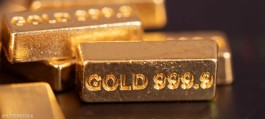



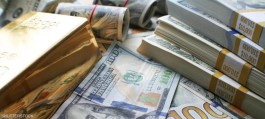





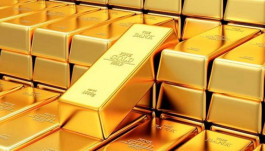



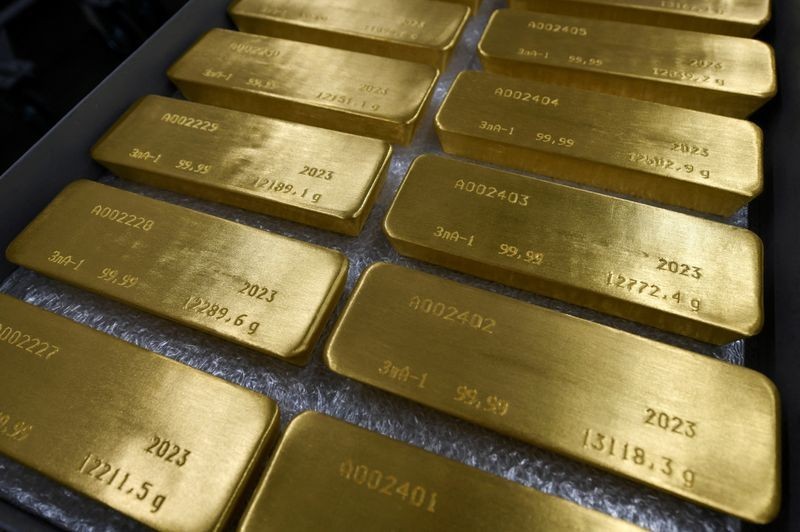


The price of gold rose to a record high, surpassing $4,500 an ounce for the first time, amid escalating tensions in Venezuela and expectations of another US interest rate cut next year.
Spot gold rose by about 0.1%, extending its gains for a third consecutive day. Tensions in Venezuela, where the United States has imposed a blockade on oil tankers, have boosted the metal's safe-haven appeal, putting it on track for its best annual performance since 1979.
Traders also expect the US Federal Reserve, after three consecutive interest rate cuts, to reduce borrowing costs again next year, which will support prices of non-yielding precious metals.
The price of gold has risen by more than 70% this year, while the price of silver has risen by 150%; both are on track for their best annual performance since 1979.
This rise in precious metal prices was supported by increased purchases by central banks and inflows into exchange-traded funds (ETFs). According to data from the World Gold Council, total holdings of gold-backed ETFs have increased every month this year except for May.
Trump's policies support precious metal prices
US President Donald Trump’s assertive moves to reshape global trade, along with his threats to the independence of the Federal Reserve, have contributed to the surge in markets earlier this year.
Investors were also partly spurred into what is known as currency devaluation trading, i.e., withdrawing from sovereign bonds and the currencies in which they are denominated, for fear that their value will erode over time as a result of ballooning debt levels.
John Feeney, director of business development at Guardian Volts, a Sydney-based bullion trading company, said the two main drivers of gold and silver prices right now are a combination of sustained physical demand and renewed sensitivity to macroeconomic risks.
He added: We are witnessing a strengthening of momentum rather than a curbing of it, which indicates a firm conviction rather than mere random speculation.
Confirming this demand, gold quickly rebounded after retreating from its previous peak of $4,381 an ounce in October, when the surge was deemed excessive.
It is now well-positioned to continue these gains into next year. Goldman Sachs is among several banks that expect prices to continue rising in 2026, having issued a baseline scenario of $4,900 per ounce with potential upside risks.
The strong demand for exchange-traded funds (ETFs) was also a major driver of the recent surge. Holdings in State Street's SPDR Gold Trust, the largest precious metals ETF, have risen by more than a fifth this year.
Traders are also monitoring developments in Venezuela, where Trump warned President Nicolas Maduro against challenging the United States and vowed to keep oil seized from a giant oil tanker.
Silver hits record high
The price of silver, which surpassed $70 an ounce for the first time on Tuesday, rose as much as 1.8% to a record high of $72.70. The white metal's surge was even more dramatic than gold's, fueled by speculative inflows and ongoing supply disruptions in major trading centers following a historic sell-off in October.
London's vaults have seen large inflows since then, but most of the silver available globally remains in New York, awaiting the results of a US Commerce Department investigation into whether imports of critical minerals threaten national security, which could lead to tariffs or trade restrictions on the metal.
Finney said: Unlike previous silver price surges that were primarily driven by debt, this move is supported by genuine demand for the metal, which is changing market behavior around key price thresholds. I don't see an end to this trend at the moment.
Platinum is also at record levels
Platinum prices surged significantly on Wednesday, rising 4% and surpassing the $2,300 per ounce mark for the first time since Bloomberg began collecting data in 1987.
Thanks to tight supplies and historically high borrowing costs, the price of the metal used in the automotive and jewelry sectors rose for the tenth consecutive session, marking its longest winning streak since 2017.
Platinum has gained 160% this year, its largest annual increase, according to Bloomberg data. This latest surge comes amid signs of market tightening in London, where banks are depositing the metal in the United States, similar to silver, to hedge against tariff risks. Platinum is also on track for its third consecutive annual deficit this year, due to supply disruptions in South Africa, its main producer.
Spot gold rose 0.6% to $4,511.91 an ounce by 10:20 a.m. Singapore time, after earlier hitting a record high of $4,525.77.
Silver rose 1% to $72.15. Platinum gained 2.2% to $2,340.52, while palladium climbed 1.3%. The Bloomberg Dollar Spot Index fell 0.2%.