




























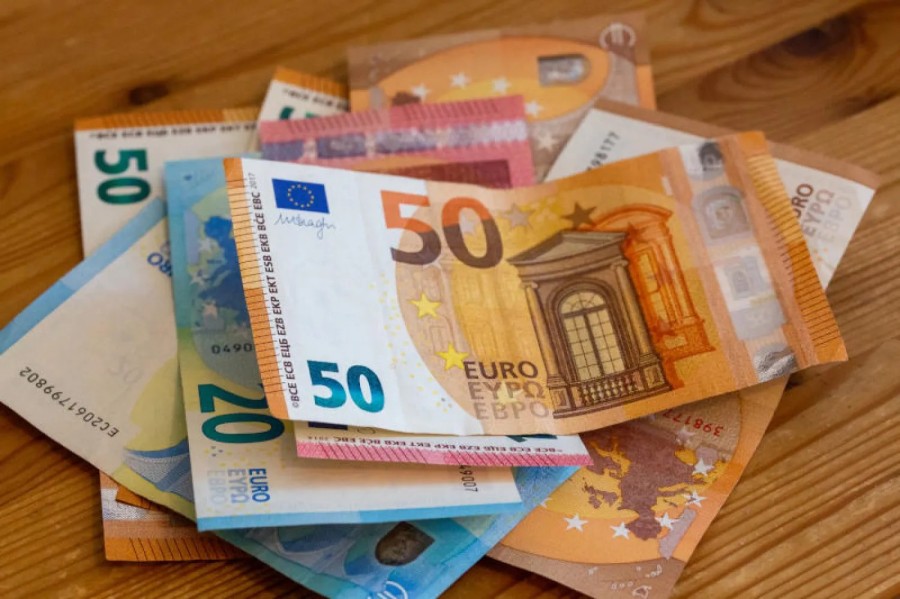


The US dollar extends its gains due to the escalating Iranian war.
Oil prices jump by more than 30% and hit a four-year high.
Markets are awaiting new clues about the path of European interest rates.
The euro slipped to a four-month low against the US dollar in European trading on Monday, as the focus remained on buying the US currency as the best alternative investment amid the escalating Iranian war.
The single currency is under severe pressure from the worsening global energy crisis, especially after the huge jump in oil and natural gas prices. This crisis is likely to lead to higher prices and an accelerated pace of inflation in the Eurozone, putting monetary policymakers at the European Central Bank under increasing inflationary pressure.
This comes at a time when the European economy may need more monetary support to curb the slowdown in economic activity, creating a complex equation between containing inflation and supporting growth.
Price overview
Euro exchange rate today: The euro fell against the dollar by about 0.95% to ($1.1507), its lowest level since November 24, from Friday's closing price of ($1.1616), and recorded a high during today's trading at ($1.1563).
The euro ended Friday's trading session up less than 0.1% against the dollar, amid some buying activity from lower levels.
The euro lost 1.7% against the dollar last week, its biggest weekly loss since April 2024, due to the global energy crisis.
Global energy prices
Global oil prices jumped more than 30% on Monday at the start of the week's trading, forcefully breaking through the $100 per barrel mark for the first time since 2022, on their way to achieving their biggest daily gain in nearly 40 years.
Prices are very close to exceeding the $120 per barrel mark, due to the escalation of military conflict in the Middle East region, and major producers there decided to reduce production after the attack on energy facilities.
Natural gas futures (TTF) jumped 50% during the last week to surpass 52 euros per megawatt-hour, the highest level since early 2023.
Wells Fargo analysts said in a note: The euro faces a difficult situation. Europe's natural gas storage season is about to begin, and the EU is preparing to start the season with record low gas levels in storage, meaning it will need to buy a large amount of energy now with the potential for prices to rise significantly.
US dollar
The dollar index rose 0.85% on Monday, hitting a four-month high of 99.70 points, reflecting a broad rally in the US currency against a basket of global currencies.
This rise is due to currency purchases as the best alternative investment, as the Iranian war enters its tenth day, amid escalating indicators of the widening scope of the military conflict in the Middle East, especially after the selection of Mojtaba, Khamenei’s son, as his successor, a choice that is not welcomed in the United States.
Opinions and analyses
Ray Attrell, head of foreign exchange strategy at National Australia Bank, said: The US dollar is strongly supported by traditional safe-haven considerations, as well as by the fact that the US is a net energy exporter, in stark contrast to most European countries.
Michael Ivery, chief global strategist at Rabobank, said: “The longer this burning situation continues, the more rapidly the damage will multiply, which is what oil is now showing to a market that saw some predictions last week that things could be much worse.”
Deepali Bhargava, head of regional research for Asia Pacific at ING Bank, said: “The real question is how high prices will rise and how long they will continue to rise, because that is what will ultimately determine the economic fallout.”
Bhargava added: “A prolonged conflict, coupled with continued currency weakness, will directly increase inflationary pressures across the region.”
George Saravelos, head of global foreign exchange market research at Deutsche Bank, said that the impact of the Iranian war on the euro/dollar pair revolves around one factor: energy.
Saravelos added: “There is a negative supply-side shock currently taking shape, which amounts to a direct tax on Europeans that must be paid to foreign producers in US dollars.”
Analysts from ING Bank wrote in a research report: “Suddenly, the European Central Bank’s position is in doubt, and we doubt that this issue can be resolved in the very near term.”
The analysts added that the possibility of the European Central Bank raising interest rates poses a serious risk to speculation on interest rate spreads and could lead to a significant widening of the spreads on Eurozone government bonds.
European interest rate
Following higher-than-expected inflation data released last week in Europe, the money market's pricing in the likelihood of the European Central Bank cutting European interest rates by about 25 basis points in March has fallen from 25% to 5%.
In order to reprice the above probabilities, investors are awaiting further economic data from the Eurozone on inflation, unemployment and wage levels.