




































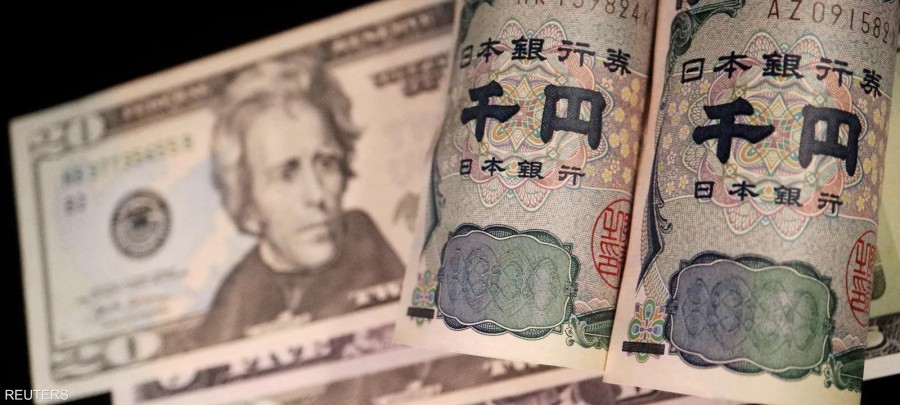


The Japanese yen held near its lowest level in nearly four decades on Monday, increasing the likelihood of intervention by Japanese authorities in the currency market, while the US dollar remained stable after last week's weak US jobs report reduced the chances of an imminent interest rate hike, according to Reuters.
The yen traded at around 162.26 against the dollar, close to last week's low of 162.84, its weakest level since 1986, keeping traders on edge after a surprise buying spree briefly lifted the currency on Thursday.
The dollar regained some of its balance after recording its worst weekly performance since April last week, affected by the US jobs report that showed a sharp slowdown in job growth during June, along with a decline in oil prices, which eased market expectations about raising interest rates during this month.
Investors are now awaiting the release of the minutes from the Federal Open Market Committee's June meeting, due on Wednesday, for clues about the path of interest rates.
The new Federal Reserve chairman, Kevin Warsh, said last week that anyone who thinks the central bank will be lenient with inflation, despite its recent decline, may be disappointed.
David Scott, market strategist at City Index, said investors are also awaiting comments from Federal Reserve Governor Christopher Waller, who months ago said that thinking about cutting interest rates would be madness, noting that his positions often reflect the future direction of the Federal Open Market Committee.
Scott added that the balance of risk and return for the dollar is no longer as heavily skewed in favor of the US currency as it was a week ago, explaining that he has adopted a more neutral stance towards the dollar index.
The yen remained the focus of market attention as investors continued to worry about official intervention to support it, although analysts doubted the ability of any potential intervention to have a lasting effect.
Moh Seong-sim, currency strategist at OCBC, said markets still face the risk of continued Federal Reserve tightening, which is putting downward pressure on the yen, but noted that the prospect of official intervention has limited the currency's decline.
He added that he expects the yen to remain under pressure in the near term.
Investors also expressed concerns that Japanese officials might abandon their usual practice of hinting at intervention in advance, and move to a more targeted approach aimed at putting pressure on speculators and increasing the cost of betting against the yen.