




























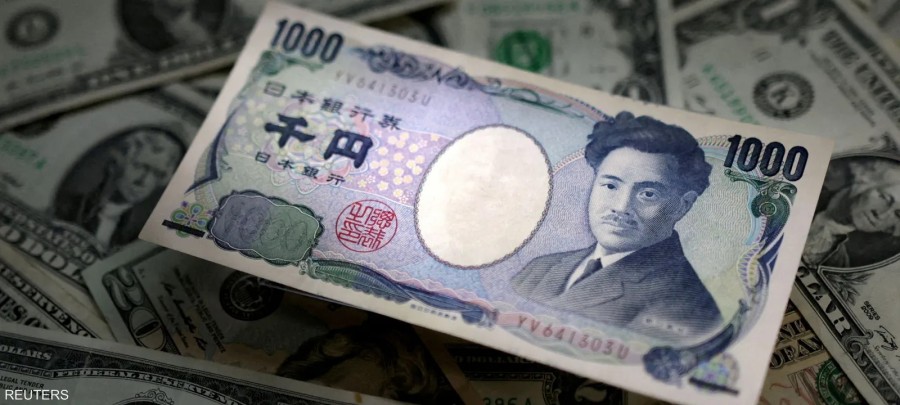


The Japanese yen fell on Wednesday to its lowest level against the dollar since late April, nearing levels that prompted Japanese authorities to intervene in the market last month, as traders continued to assess the risk of renewed war in Iran.
In contrast, the New Zealand dollar was among the best performing currencies during the session, after the Reserve Bank of New Zealand unexpectedly moved closer to raising interest rates, and indicated the possibility of a need for faster and larger increases than previously expected.
The US dollar stabilized after slight gains on Tuesday against a basket of major currencies, following US strikes on Iran that dashed hopes for a swift end to the fighting and the reopening of the Strait of Hormuz, one of the world's most vital shipping lanes.
US Secretary of State Marco Rubio said that reaching an agreement to end the conflict could take a few days.
The yen settled at 159.45 against the dollar, its weakest level since April 30, when Japanese authorities intervened to support the currency. Many traders consider the 160 yen-to-the-dollar level a sensitive point that could prompt further intervention by authorities, as happened last month.
Hardman told me that markets are leaning optimistically toward the possibility of reaching an agreement on Iran, which was reflected this week in the weakening of the dollar and the decline in US bond yields.
He added that the surprise lies in the continued weakness of the yen, even though lower energy prices and declining US bond yields were supposed to support the Japanese currency against the dollar.
The dollar index, which measures the performance of the US currency against the yen and five other major currencies, settled at 99.08 after rising 0.15% on Tuesday.
Meanwhile, the euro rose to $1.1644, while the pound sterling held steady at $1.3446.
The New Zealand dollar rose 0.6% to $0.587, recovering some of the losses it suffered on Tuesday.
The Australian dollar fell 0.4% to $0.714 after data showed the annual inflation rate slowed to 4.2% in April, compared with 4.6% in March, and below analysts' expectations of 4.4%.