

































Gold moved in a narrow range as traders weighed inflation risks against attempts to contain the oil supply shock caused by the war in the Middle East.
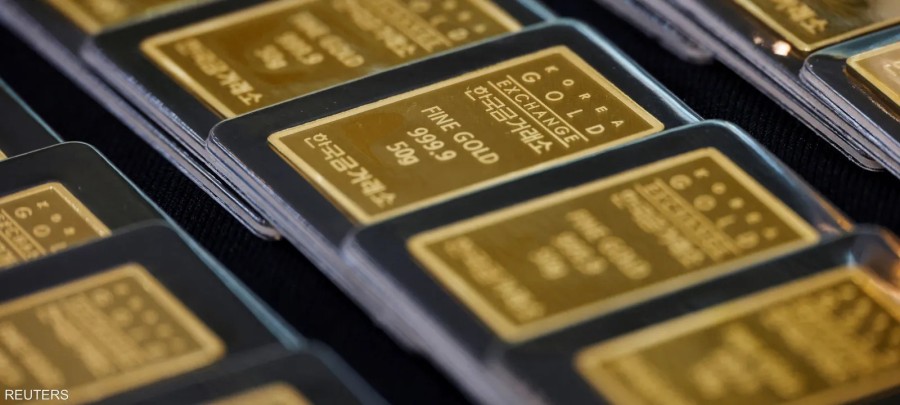
The precious metal rose as much as 0.5% to remain above the $5,000 per ounce level, after falling 0.3% in the previous session.
Oil prices rose after their first decline in about a week, as Iran escalated its attacks on the Arabian Gulf, while the United States prepared to release the first batch of emergency stockpiles.
US President Donald Trump has called on other countries to help secure the Strait of Hormuz, where crude oil transits have almost completely stopped.
The war weakens expectations of an interest rate cut.
With the war between the United States, Israel and Iran entering its third week, and rising energy prices fueling inflation fears, the likelihood of the Federal Reserve and other central banks cutting interest rates has diminished.
Traders believe there is virtually no chance of an interest rate cut at the bank's meeting this week. Higher borrowing costs typically negatively impact non-yielding precious metals.
Despite recent declines, gold is still up about 16% since the start of the year, supported by geopolitical uncertainty and threats to the independence of the Federal Reserve, which boost demand for safe-haven assets.
Concerns about stagflation, a combination of slowing growth and high inflation, also support gold in the long term, enhancing its appeal as a store of value.
Chinese demand remains strong
Demand for gold remained particularly strong in China, where investors continued to increase their holdings of the metal through exchange-traded funds daily since returning from the Lunar New Year holiday on February 24.
During that period, total holdings exceeded 17 billion yuan ($2.5 billion) in value, according to Bloomberg calculations. Price premiums in Shanghai also rose above the global price, indicating strong demand.
Rona O'Connell, head of market analysis at StoneX Financial, said that demand for gold in China has remained relatively steady in recent weeks, adding that the strength of the Chinese currency has put some pressure on domestic prices.
Spot gold rose 0.4% to $5,026.75 an ounce at 12:20 p.m. Singapore time. Silver gained 0.9% to $81.50.
Platinum and palladium also traded higher. The Bloomberg Dollar Spot Index rose 0.1% after falling 0.6% on Monday.