









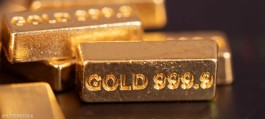







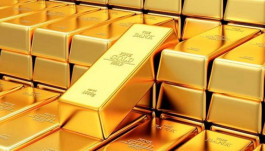





Global gold prices rose during trading on Wednesday, supported by a drop in oil prices following the United States' decision to extend the ceasefire with Iran, which helped to calm concerns about accelerating inflation and the continuation of high interest rates for a long period.
Trump's decision and its impact on market direction
US President Donald Trump announced an indefinite extension of the ceasefire with Iran, just hours before the truce was set to expire, in order to allow more time for political negotiations.
It appears that the decision was made unilaterally by the American side, as it is not yet clear whether Iran or Israel will agree to this extension.
This development prompted markets to adopt a more relaxed outlook, as they began pricing in the possibility of a temporary de-escalation, which was directly reflected in the movements of various assets.
Analysts' view: A temporary lull could quickly turn into chaos.
Edward Meir, a market analyst at commodities trading firm Marex, said the extension of the ceasefire gives the impression that the crisis is easing, but warned that any return to tensions would push the dollar, oil prices and interest rates higher, which would put pressure on gold.
This analysis reflects the complex nature of gold's movement, which is simultaneously influenced by geopolitical and economic factors.
The markets also reacted quickly to the news, with stocks rising, the dollar falling, and oil prices declining – all factors that combined to support the yellow metal.
A complex equation between oil and interest
Oil prices directly affect inflation, as their rise leads to increased transportation and production costs, which is reflected in the prices of goods and services.
Although gold is used as a hedge against inflation, rising interest rates reduce its appeal because it does not generate a return compared to other assets such as bonds.
Therefore, the decline in oil prices and interest rate expectations give gold room to move upwards, which is what happened after the announcement of the truce extension.
Major financial institutions assess gold price movements
Standard Chartered, one of the world's largest banks, noted that gold's movements remain closely linked to news of a truce in the Middle East, as well as liquidity needs in the markets.
The bank explained that the recent price surge remains fragile and may be subject to a short-term correction, but at the same time it expects precious metals to regain their strength, with gold potentially returning to test its record levels.
This assessment reflects the state of anticipation that prevails among investors, in the absence of a clear long-term direction.
The Fed's developments add further uncertainty.
In a related context, Kevin Warsh, the nominee for chairman of the US Federal Reserve, the central bank of the United States, stated that he made no commitments to lower interest rates.
He stressed that his future decisions would be independent of political pressure, in an attempt to reassure US lawmakers about the neutrality of monetary policy.
This statement adds a new element of uncertainty, as interest rate expectations remain one of the most significant factors affecting gold's movement.
Gold at settlement yesterday
Gold prices fell at the close of trading on Tuesday, affected by the rise in the dollar and US bond yields.
Gold futures for June delivery fell 2.26%, or $109.20, to $4,719.60 an ounce.
Gold now
Gold rose 0.9% in spot trading to $4,754.89 an ounce, after having fallen in the previous session to its lowest level since April 13.
Gold futures for June delivery also rose 1.1% to $4,772.60, indicating improved investor appetite for the precious metal.
Precious metals move in one direction
The rise was not limited to gold alone, but extended to other precious metals, as silver rose by 1.7% to reach $77.97 per ounce.
Platinum also rose 1.7% to $2,070.37, and palladium climbed 1.9% to $1,561.72.