





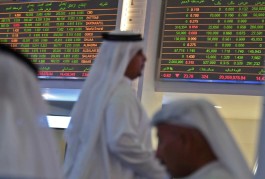
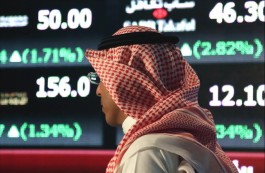
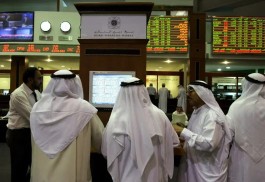
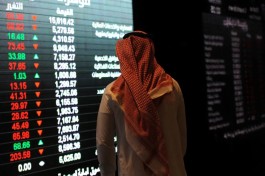
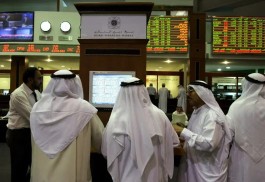
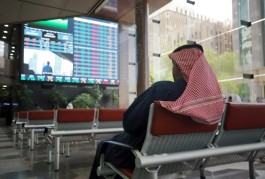












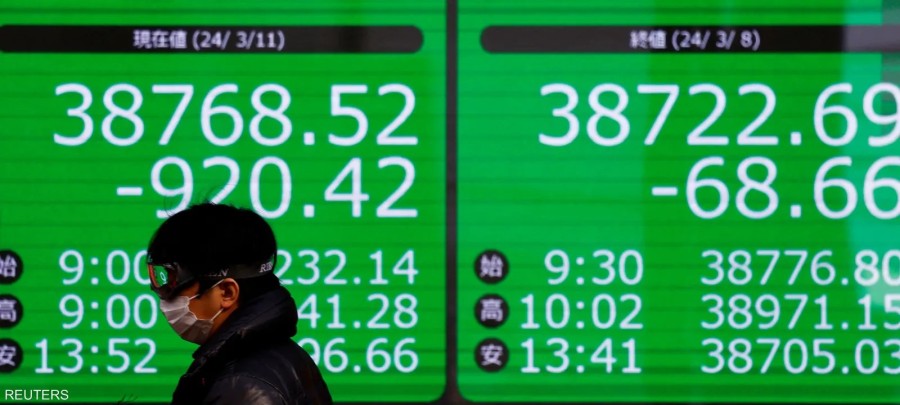


Asian stocks fell at their fastest pace in nearly a year, led by the biggest collapse in South Korea since the 2008 global financial crisis, as fears of war with Iran intensified, triggering a wave of exodus from some of the world's best-performing markets.
The MSCI Asia Pacific index fell by as much as 4.5%, while South Korean stocks plunged by as much as 12% amid escalating panic in trading rooms.
Prior to this decline, the Kospi index, a measure of AI-related investments, was the best-performing index globally. Japanese stocks fell by 3.5%, while Hong Kong stocks declined by 2.8%.
US stock index futures also declined, suggesting the possibility of further losses.
Asian stocks buck Wall Street trend
The sharp moves in Asian stocks contrasted with those in US markets, where assurances from US President Donald Trump about protecting shipping through the Strait of Hormuz helped to calm fears.
While stocks declined, other markets saw less significant movement. Brent crude rose 1.4%, and gold climbed 1.8%, recovering from losses suffered on Tuesday.
The Bloomberg Dollar Spot Index rose 0.1%, while U.S. Treasury bonds were steady, with the yield on the benchmark 10-year note remaining virtually unchanged at 4.06%.
Hebei Chen, senior market analyst at Vantage Global Prime, said Asian markets are being choked by a toxic mix: soaring energy prices, a resurgent dollar, and geopolitical tensions that no one can ignore anymore. She added: “This isn’t just a technical correction; it’s more like a psychological capitulation in the market.”
The US and Israeli attack on Iran has destabilized the Middle East and threatens to create a new inflationary shock to the global economy by driving up oil prices.
There is also no clear vision of when or how the war will end, increasing the likelihood of a prolonged conflict and unforeseen consequences beyond the White House's control.
The war is putting pressure on global markets.
The repercussions of the war continued to spread across the Middle East, with Israel bombing Tehran in a new wave of strikes. Iran also launched missiles toward Qatar, Bahrain, and Oman, with Doha stating that the targets were not limited to military interests. Qatar and Iraq also halted production at key energy facilities.
Kyle Rodda of Capital.com wrote that the danger lies in the magnitude of the supply shock a war could create. He added: Given the highly chaotic nature of events, and the strong incentives all sides have to escalate right now, this uncertainty could persist for some time.
This conflict is different from Trump’s trade war, his talk of invading Greenland, or his attack on the independence of the Federal Reserve, all of which have previously worried investors globally.
In each of those cases, traders had become accustomed to expecting Trump to back down if the markets fell too much, a strategy known as the Taco trade, short for Trump always backs down, which created a buy-on-the-dip mentality that allowed stocks to bounce back.
Fouad Razakzadeh of Forex.com said: Right now, markets are moving from one headline to the next. Much will depend on whether the tensions subside or mark the beginning of a longer disruption to global supplies.
Oil is a major concern for investors
Garfield Reynolds, head of the Bloomberg Markets Live team, indicated that Asian stocks are likely to continue declining as long as traders remain concerned about the possibility of oil prices rising to levels higher than current ones.
He added: The region's heavy reliance on oil and gas from the Middle East means that sharp fluctuations in oil futures contracts will push Asia-Pacific stocks further down, with investors forced to take worst-case scenarios into account.
Markets are focused on oil as traders assess Trump's plan to secure and escort oil tankers passing through the Strait of Hormuz, at a time when shipping traffic in this vital waterway has virtually ground to a halt. Oil continued its gains, with Brent crude settling just above $82 a barrel, after surging nearly 12% in two days, its biggest jump since 2020.
Commenting on Trump's remarks, Hitoshi Asaoka, chief strategist at Asset Management One, said: Looking at the other headlines, it remains doubtful whether that alone will be enough to reassure the markets.
The combination of rising oil prices and a strong dollar is creating an uncomfortable situation for Asian economies. The dollar posted its biggest two-day gain in nearly a year. Asian currencies also fell to their lowest level since January this week, although the decline was limited by Chinese intervention to support the yuan.
Stocks remain high this year
Despite this week's losses, Asian stocks are still up about 5.5% since the start of the year, following a 25% rise in 2025. Stocks have rebounded since their April slump, which came after Trump announced tariffs, with bets that the billions of dollars companies are spending on artificial intelligence will pay off.
George Efstathopoulos, portfolio manager at Fidelity International, told Bloomberg Television that many markets have performed very strongly since the beginning of the year. He added, So we're seeing some reductions in investment positions. But at the same time, I think it depends on how long this crisis lasts.