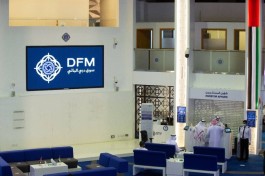
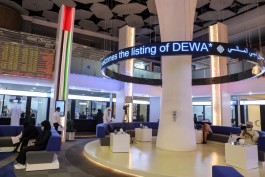

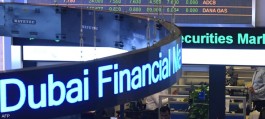
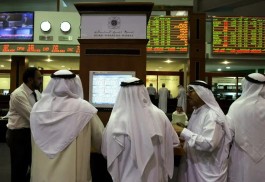
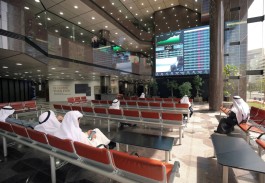
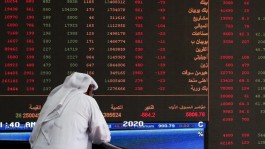
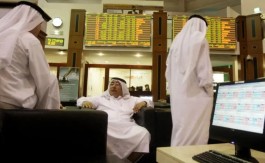
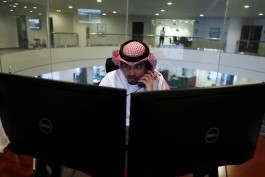
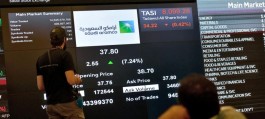
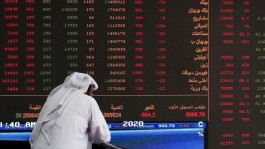


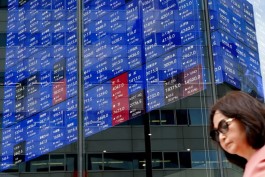
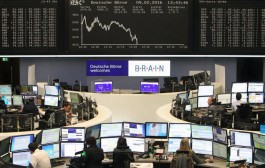




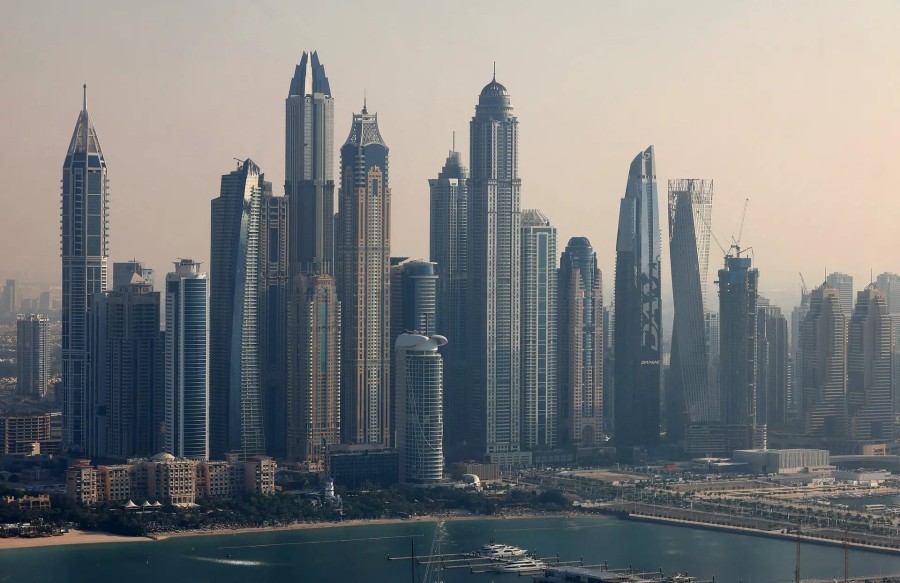

The Dubai Financial Market strengthened its performance during 2025, benefiting from the strength of the UAE economy, the significant gains achieved by leading stocks, and increased demand from international institutions and investors.
The market index rose by 17.22 percent, with gains equivalent to 888.42 points, climbing from 5158.67 points at the end of December 2024 to 6047.09 points in yesterday's session, Wednesday, which is the last session of 2025.
Market capitalization also increased from AED 906.9 billion to AED 992.1 billion, gaining approximately AED 85.2 billion during the year.
Performance of key sectors:
Several sectors recorded remarkable growth, most notably:
Banking sector: +24.4 percent
Industrial sector: +27.9 percent
Real estate sector: +15.04 percent
The market also witnessed significant activity from foreign (non-Arab) investors, who turned to buying with a net investment of AED 5.79 billion, after purchases worth AED 72.67 billion compared to sales worth AED 66.87 billion.
Stocks attracted liquidity exceeding 165.2 billion dirhams through the trading of 62.46 billion shares in 3.35 million transactions.
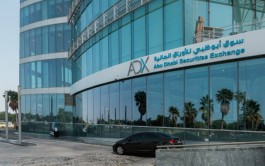
Abu Dhabi Securities Exchange achieves positive performance
In contrast, the Abu Dhabi Securities Exchange recorded a more subdued positive performance, with its general index (Fadji) rising by 6.09 percent during 2025 up to yesterday’s session, to close at 9992.72 points.
The market capitalization rose from AED 3 trillion to AED 3.139 trillion, gaining approximately AED 139 billion. Stocks also attracted liquidity exceeding AED 385.57 billion through the trading of 102.28 billion shares and the execution of 5.68 million transactions.
Expert analysis: Outstanding performance compared to regional markets
For his part, Wael Mahdi, Trading Manager at Daman Securities, confirmed in an exclusive interview with Sky News Arabia that the UAE financial markets recorded exceptional performance during 2025, with the Dubai Financial Market achieving gains ranging between 19 percent and 20 percent, maintaining its levels above the 6,000-point mark, which is a very positive technical indicator, especially in light of the challenges witnessed by global and regional markets.
Mehdi attributed this strong performance to the rapid economic growth in the UAE, which has relatively outpaced growth rates in the United States and Europe, thus contributing to attracting foreign capital.
He pointed out that the financial results of leading companies during 2025 were positive, supported by generous distributions at the beginning of the year, which prompted investors to build new financial positions during last December in preparation for the results and distributions of 2025, thus contradicting the usual calm trading at the end of the year.
Leading sectors: Banking and Real Estate
Regarding the sectors supporting this rise, Mehdi explained that the banking and real estate sectors were the main drivers of the market in 2025.
He pointed out that the start of the interest rate reduction cycle gave banks more flexibility to expand their lending operations, which had a positive impact on the private sector and the banks' operating returns.
The real estate sector also witnessed a surge in sales and the launch of huge projects whose units were fully completed, especially by leading companies such as Emaar, Emaar Development, Aldar Properties, and Modon.
Governmental and strategic performance
Mehdi highlighted the outstanding performance of government and semi-government companies, praising ADNOC Group's five-year strategy which boosted foreign investment in its four listed companies. He also noted the strong performance and consistent dividend payouts of Dubai-listed companies such as DEWA, Salic, and Parkin.
2026 Predictions: Liquidity and New IPOs
The trading manager at Daman predicted that the first half of the year would see new initial public offerings in both markets, noting that there are companies in the process of preparing (such as Dubizzle, which previously postponed its listing due to market conditions).
He predicted a strong return of liquidity during January and February, coinciding with the season for announcing results and distributions.
Mehdi concluded his remarks by emphasizing that expectations of further interest rate cuts (two possible cuts in 2026) will benefit various economic sectors, praising the robust regulatory framework of the UAE Central Bank, which has enabled banks to deal flexibly and make the most of global monetary changes.