





















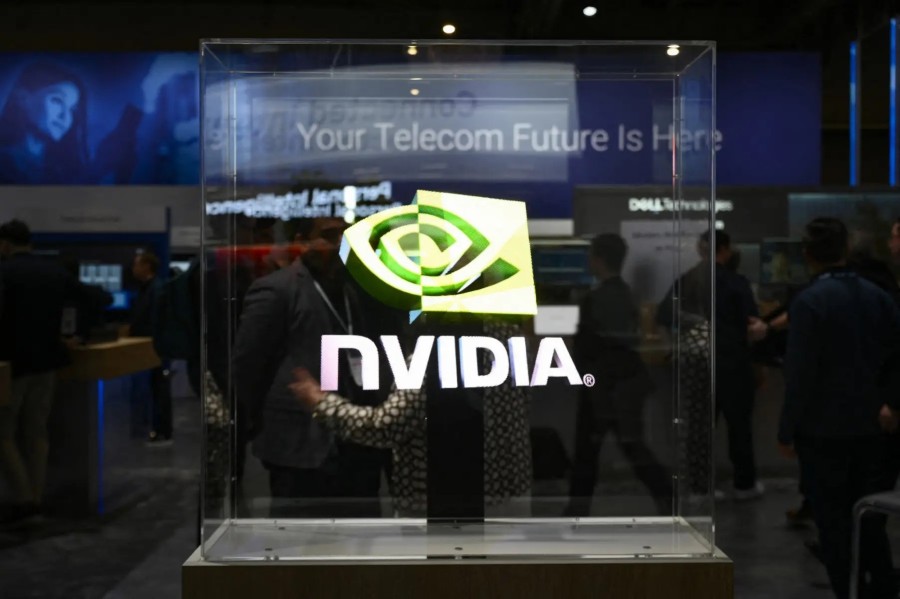

The list of Asian stocks benefiting from partnerships with Nvidia is expanding, as the region's integration into the AI chip giant's business ecosystem deepens.
Just last week, shares of South Korea’s LG Electronics, Taiwan’s Nanya Technology, along with China’s Huizhou Desai SV Automotive and Patio Connect Technology Shanghai, were the latest to rise thanks to news of partnerships, supply chain involvements, or product development collaborations with the U.S. firm.
The enthusiasm of investors for these companies – some of which do not have a wide presence outside their local markets – reflects the extent to which demand, led by Nvidia, is shaping the performance of technology stocks across Asian supply chains.
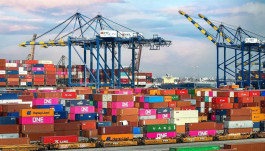
According to data compiled by Bloomberg, Asian suppliers now account for about 90% of Nvidia's production costs, compared to about 65% last year. The explosive growth of the company's chip-designed products has increased its reliance on Asian partners who dominate manufacturing, assembly, and the supply of key components.
Physical artificial intelligence is an additional driver for reliance on Asia.
V-Cern Ling, managing director at Union Bancaire Privee, said that global technology companies like Nvidia's reliance on Asian supply chains will continue to expand, adding that physical artificial intelligence could further boost the already growing demand for AI chips from the region.
In recent years, Nvidia has expanded its partner network in Asia, particularly by deepening relationships with suppliers such as SK Hynix and Samsung Electronics. While these partnerships previously focused on enhancing computing capabilities, the new wave indicates a shift towards physical artificial intelligence, including robotics.
Technology stocks in Asia rise
Shares of LG Electronics jumped nearly 15% during Tuesday's session, their biggest daily gain since February 11, following media reports that the company is exploring a plan with Nvidia to integrate its home robots with the US chip design firm's platform.
In Taiwan, Nanya's shares jumped 10% following reports of its collaboration with the US company. In China, Huizhou Desai's shares surged after the launch of a mass-production intelligent driving solution in partnership with Nvidia, while shares of auto parts manufacturer Patio Connect jumped after announcing a series of collaborations with the company.
An LG spokesperson confirmed that the company had indeed held a meeting with Nvidia, and that the two parties were exploring strategic collaboration in the field of physical artificial intelligence, including robotics systems.
A representative for Samsung Electronics declined to comment on Bloomberg's inquiries. Nanya, in an emailed response, said it does not comment on customer-related information.
Growing reliance on Asia in artificial intelligence
Nvidia's focus on physical AI—encompassing robotics, autonomous systems, and AI-powered manufacturing—is expanding its reach beyond chips into real-world applications, solidifying Asia's role as a key partner in this expansion. CEO Jensen Huang has described this approach as the next wave after generative AI.
Marvin Chen, a strategist at Bloomberg Intelligence, said that growing and expanding demand is creating opportunities across various sectors for more technology suppliers to join supply chains as artificial intelligence continues to develop globally, and this means that technology-rich North Asian markets may continue to outperform others.
Spending hundreds of billions by American tech giants
The latest capital expenditure estimates for major US technology companies show an acceleration in spending on artificial intelligence, with companies such as Amazon, Microsoft and Alphabet planning to spend between $190 billion and $200 billion this year, while Meta Platforms has increased its spending to about $145 billion.
Nvidia accounts for roughly half of Microsoft's capital spending and about a quarter of Amazon's, with significant stakes also at Meta and Alphabet, according to Bloomberg estimates.
At the same time, Hon Hai is a consistent minor beneficiary, particularly in Microsoft and Amazon, while SK Hynix gets a mid-single-digit share across companies.
The impact of this demand is evident in the results of suppliers, as Samsung's semiconductor unit recorded a nearly 48-fold jump in profits, while SK Hynix announced a few days ago that its quarterly profits had increased by nearly five times.
Rajiv de Mello, portfolio manager at Gama Asset Management SA, said that Asia’s technological base represents a significant structural advantage, especially with the increasing demand for semiconductors, components, servers, and hardware infrastructure in general as a result of artificial intelligence. He added that Asia has already developed considerable expertise and supply chains for building advanced semiconductors and robotics, forming a strong foundation for the application of physical AI.