

























Oil prices rose following attacks on some of the Middle East's most important energy facilities, raising fears of a more severe impact from the conflict that has been ongoing for nearly three weeks.
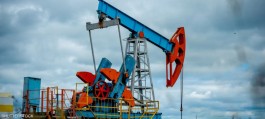
Brent crude rose as much as 5.1% to near $113 a barrel, while the more actively traded West Texas Intermediate contract settled near $96. US natural gas also jumped 6.5%.
Iran carried out attacks on a major liquefied natural gas site in Qatar, one of several energy asset sites it has threatened to target, following Israeli strikes on its giant South Pars gas field.
Oil prices have risen by about 50% since the start of the war that has wreaked havoc in the Middle East, choking shipping through the Strait of Hormuz and cutting off a large portion of oil and gas production.
However, Iran’s energy sector has largely remained unscathed so far, helping to contain the potential for an escalation that could have a greater impact on long-term supplies.
The risk of escalation could push prices to record levels.
Harris Khurshid, investment director at Carobar Capital in Chicago, said: The market is still underestimating and not fully pricing in the risks, particularly how quickly this escalation could turn into broader direct hits on the region's energy infrastructure.
He added: If things develop into direct strikes, the $120 level will not be a ceiling, but a starting point, and reaching $140 to $160 will not be out of the question at all, referring to Brent prices.
US President Donald Trump said the United States was unaware of the Israeli attack on the South Pars gas field, but threatened to blow up the entire field using US forces if Qatari assets were hit again.
He added earlier this week that targeting oil infrastructure at Iran’s main export hub on Kharg Island remains an option, following the bombing of military targets there.
Will Todman, a senior fellow in the Middle East program at the Center for Strategic and International Studies, said that putting pressure on the Strait of Hormuz means that President Trump cannot simply declare victory and withdraw, because that will not solve the underlying problem.
He added: Many of the options Trump has to increase pressure on Iran would push energy prices to higher levels, including trying to seize Kharg Island or targeting Iranian energy production facilities.
Extensive damage to gas facilities
Local authorities said that Ras Laffan Industrial City in Qatar, which houses the world's largest liquefied natural gas export facility, suffered extensive damage from a missile strike, while a subsequent attack caused a fire.
The South Pars field is important for supplies to the domestic market, as well as to neighboring Iraq and Turkey, and associated oil and petrochemical assets have been hit in the Asaluyeh region inside Iran.
Tom Marczek-Manser, director of European gas and liquefied natural gas at Wood Mackenzie, said the attack on Ras Laffan was exactly what the LNG market had feared, following strikes targeting South Pars in Iran earlier in the day.
He added: It is not yet clear which part of the industrial complex was damaged, but in any case this will have a supportive effect on gas prices when the market opens on Thursday.
In a separate development, Abu Dhabi said it had halted operations at its Habshan gas facilities after missiles were intercepted, resulting in debris falling from the site. Bahrain denied a report by Iran's semi-official Fars news agency that a liquefied natural gas (LNG) refinery had been struck.
Possible US policies to curb prices
RBC Capital Markets said the United States may consider imposing tariffs on crude oil exports or even banning them altogether to counter the soaring energy prices resulting from the trade war, which has widened the gap between West Texas Intermediate and Brent crude. The spread has now reached a discount of more than $12 per barrel.
As part of efforts to combat rising prices, Trump temporarily suspended a century-old maritime law known as the Jones Act, with the aim of reducing the costs of transporting oil, gas, and other goods within the United States.
Meanwhile, Vice President J.D. Vance and other key Trump administration officials plan to meet with top oil executives on Thursday.