



































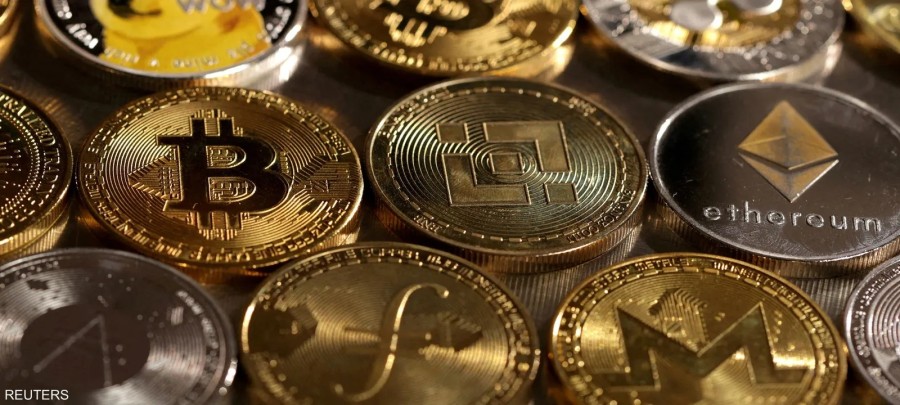


Cryptocurrency prices showed mixed performance during trading on Wednesday, with Bitcoin tending to decline, as investors awaited the release of the minutes from the Federal Reserve’s last meeting, looking for new signals on the path of US interest rates, in addition to the continued uncertainty related to developments in the Strait of Hormuz.
Despite the pressures on the cryptocurrency market, CryptoQuant data showed that major Bitcoin holders returned to buying after months of selling, with cryptocurrency whales adding about 43,000 Bitcoins in the past 60 days, worth an estimated $2.75 billion.
Data from Glassnode indicated that the buying spree was not limited to the largest investors, as Bitcoin holders with holdings between 100 and 1,000 units also increased their positions, coinciding with a rise in purchases by investors whose holdings exceed 10,000 Bitcoins.
The activity of major investors reflects a notable shift in market behavior, especially after a period of selling that put pressure on Bitcoin prices, as the rise in major investor holdings may indicate improved confidence in the cryptocurrency's medium-term prospects.
In contrast, US monetary policy remains one of the most prominent factors influencing the movements of digital assets, as investors await the minutes of the Federal Reserve meeting to obtain indications of policymakers’ directions towards interest rates, especially in light of the continued monitoring of US inflation and labor market data.
Geopolitical developments related to the Strait of Hormuz are adding an extra element of uncertainty to the markets, with ongoing concerns about energy flows and global trade, which may prompt investors to reduce their exposure to riskier assets.
As for prices, Bitcoin fell 0.59% to $64,223.63, a loss of $382.50. In contrast, Ethereum rose 0.08% to $1,915.54, gaining $1.99, while Ripple climbed 0.38% to $1.0034, an increase of $0.0037.
The movements of major Bitcoin holders indicate continued strong demand from investors with a longer investment horizon, but the direction of the market in the coming period will remain largely dependent on the course of US monetary policy and geopolitical developments, especially those related to the Strait of Hormuz and energy markets.