











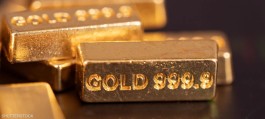






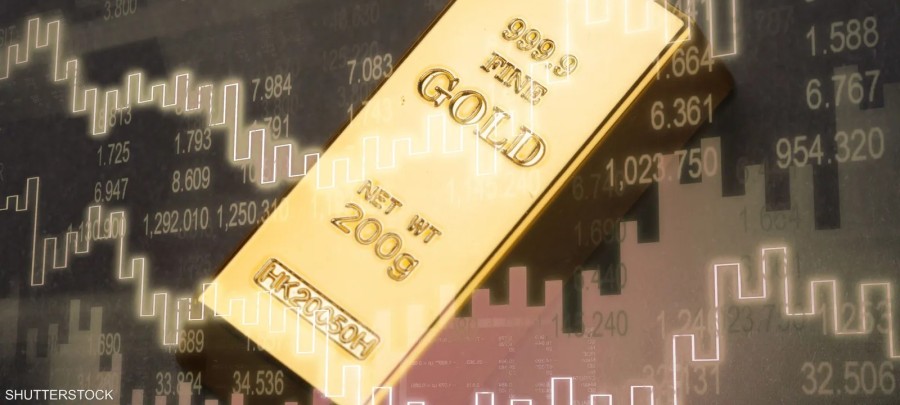


Gold prices declined during trading on Tuesday as investors took profits following a strong rally that exceeded 2% during the previous session, which halted the positive momentum that had dominated the precious metal in recent days.
Don't miss the opportunity to excel in the financial markets, especially with the availability of the Investing Pro platform in Arabic and subscription prices starting at discounts of up to 50% for a limited time. Whether you're tracking gold or other assets, subscribe today via the link provided and begin a smarter investment journey supported by the most powerful analytical tools and reliable data that will enable you to navigate the world of financial markets with confidence.
Markets calm down after a strong rally
Analysts believe that the current situation does not represent a fundamental shift in the overall trend of gold, but rather a consolidation phase following previous gains. Ilya Spivak, head of global macro research at Tasty Life, explained that the strong rally in the previous session necessitated a temporary lull, noting that the absence of the panic seen on Wall Street and its failure to spread to Asian markets is a significant indicator of stable investor sentiment.
Meanwhile, Asian stocks managed to achieve some stability after a volatile start, as sentiment was affected by sell-offs related to artificial intelligence stocks on Wall Street, along with continued concerns about US trade policies and escalating global geopolitical tensions.
The strength of the US dollar came as an additional factor putting pressure on gold, as the rise in the US currency increased the cost of the dollar-denominated metal for holders of other currencies, which reduces short-term investment demand.
Trade policy and the Federal Reserve are steering the markets.
On the political front, US President Donald Trump warned countries against backing out of recently concluded trade agreements with the United States, following the Supreme Court's decision to cancel the emergency tariffs he had previously imposed, stressing that any withdrawal from those agreements could be met with higher tariffs under other trade laws.
In the context of monetary policy, Federal Reserve member Christopher Waller indicated his openness to keeping interest rates unchanged during the March meeting, provided that the anticipated jobs data for February shows a clear improvement in the labor market after the weak performance recorded during 2025.
These statements reflect the state of anticipation prevailing in the markets, as investors are still trying to assess the future path of US interest rates, which is the most influential factor in the direction of gold in the coming period.
Current market pricing, according to the US interest rate tracking tool available on Investing Saudi Arabia, indicates expectations of three US interest rate cuts of 25 basis points each during this year, a scenario that supports gold in the medium term if it actually happens.
Gold at settlement yesterday
Gold prices rose at the close of trading on Monday, driven by increased demand for safe havens amid uncertainty over US President Donald Trump's trade policy, after he pledged to raise tariffs following the Supreme Court's cancellation of most of the tariffs he had imposed.
Gold futures for April delivery rose 2.85%, or $144.7, to $5,225.60 an ounce, after posting gains for the third consecutive week at the end of trading last Friday.
Gold now
Spot gold fell 1.2% to $5,167.28 an ounce, ending a four-session winning streak, after hitting its highest level in more than three weeks earlier in the day.
US gold futures for April delivery also fell by 0.7% to $5,187.40 an ounce, a natural reflection of a technical correction after rapid gains that prompted some traders to lock in short-term profits.
Precious metals movement
In other metals markets, spot silver fell 0.9% to $87.39 an ounce after hitting its highest level in more than two weeks during Monday's session, while platinum declined 0.5% to $2,142.35 an ounce.
In contrast, palladium rose 0.4% to $1,750.98 an ounce, reflecting the continued divergence in the performance of industrial metals compared to the yellow metal, which remains the most sensitive to dollar fluctuations and global monetary policy expectations.