
















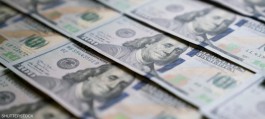

















The dollar edged lower on Tuesday as investors weighed the prospects of a deal to reopen the Strait of Hormuz against expectations of higher U.S. interest rates following last week's strong jobs data.
The US economy is seen as less vulnerable to energy shocks than other economies, which led investors during the escalation in the Middle East to turn to the dollar as a safe haven, while both the euro and the Japanese yen came under selling pressure.
Conversely, investors tend to sell the dollar against the euro and the yen when developments in the Middle East suggest the possibility of a peace agreement that could calm oil prices.
U.S. Treasury yields rose sharply on Friday after data showed that U.S. employers added more jobs than expected in May, boosting bets that the Federal Reserve will raise interest rates later this year.
Thierry Wezeman, global currency and interest rate strategist at Macquarie Group, said: Following Friday's data, markets may have shifted from a narrative driven by economic growth to one driven by rising real yields.
Iran and Israel announced on Monday a halt to mutual attacks following a call from US President Donald Trump, although Tehran warned it would resume operations if Israel continued to target Hezbollah in Lebanon.
Weizman added: At the same time, the “neither deal nor war” situation between the United States and Iran may not last indefinitely.
He went on to say that the US administration might at some point seek to reopen the Strait of Hormuz by force, especially if global oil stocks fall to critical levels.
The US dollar index, which measures the performance of the US currency against a basket of major currencies, fell 0.12% to 99.88 points, after hitting its highest level since April 6 on Monday.
In contrast, the euro rose 0.1% to $1.1545 after direct strikes in the Middle East ceased, with investors turning their attention to the upcoming European Central Bank meeting, where markets expect an interest rate hike of 25 basis points.
Investors are also awaiting US inflation data due on Wednesday for further clues about the Federal Reserve's next move. Interest rate futures currently indicate a 70% probability of a rate hike by December, according to CME Group's FedWatch tool.
Analysts noted that strong growth and persistent inflationary pressures could lead markets to continue favoring a US interest rate hike, even if a potential agreement is reached between Washington and Tehran.
As for the Japanese yen, it fell to 160.22 against the dollar, remaining near the 160 level, which markets consider a red line that could prompt Japanese authorities to intervene in the exchange market.
Meanwhile, markets have almost fully priced in the likelihood of the Bank of Japan raising interest rates at its meeting scheduled for June 16, but analysts believe that this move alone may not be enough to significantly reverse the yen's weakness.
Lee Hardman, senior currency economist at MUFG, said that if the Bank of Japan does not raise interest rates again, it will trigger a stronger negative reaction towards the yen and reinforce concerns that the bank is lagging behind in addressing inflation risks.
Meanwhile, the risk-sensitive Australian dollar rose 0.14% to US$0.7054.