






























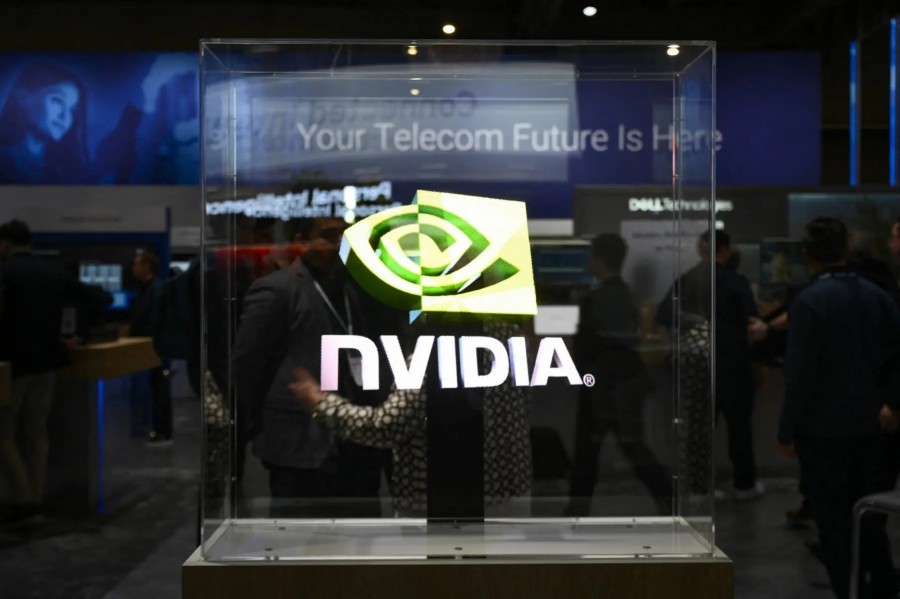


Chipmaker Nvidia predicted Wednesday that its first-quarter revenue would exceed market estimates, relying on continued spending by major technology companies on artificial intelligence processors amid widespread scrutiny of massive investments in that emerging field.
Data from the London Stock Exchange Group indicates that the world's most valuable company expects its sales in the first quarter of the fiscal year to reach $78 billion, up or down by two percent, compared to the average analyst estimate of $72.60 billion.
Nvidia reported Wednesday that fourth-quarter revenue rose to $68.1 billion compared to last year, exceeding analysts' expectations, and sales increased by 20 percent compared to the previous quarter.
Net income increased by 94 percent year-on-year to approximately $43 billion, while earnings per share also exceeded analysts' expectations.
Investors are looking to Nvidia's results to assess whether the hundreds of billions of dollars that major technology companies are pumping into data center infrastructure are paying off.
Wall Street is betting on strong demand for Nvidia’s advanced AI chips, an assumption backed by massive capital spending from Alphabet, Microsoft, Amazon and MetaPlatforms, which is expected to total at least $630 billion in 2026, with most of the spending earmarked for data centers and processors.
Companies and governments are spending relentlessly in a race to develop the most advanced artificial intelligence technologies, or risk being left behind.
But there are signs that Nvidia's long-standing dominance in the AI chip industry is at risk. Its smaller rival, AMD, is expected to unveil a new AI server later this year and has already struck deals with major Nvidia customers, including Meta.
Meanwhile, Alphabet's Google emerged as a major competitor with a deal to supply Anthropic, the developer of the Cloud chatbot, with its internal chips (TPUs). Media reports also indicate that Google is in talks to supply Meta with those chips.
Nvidia's shares rose more than 3 percent in after-hours trading.