



































Global gold prices rose during Thursday's trading session, supported by dip buying, but remained on track for their second consecutive monthly loss, as rising oil prices continued to fuel concerns about inflation and interest rates remaining high for a longer period.
Oil and interest rates are putting pressure on gold.
Tim Waterer, senior market analyst at KCM Trade, noted that gold has faced difficulties this month, as rising oil prices have dominated the scene, explaining that the rise in crude oil leads to higher inflation and interest rate expectations, which in turn limits the appeal of gold as an investment asset.
Conversely, he explained that a combination of buying at lower levels, along with expectations that a peaceful resolution to the conflict between the United States and Iran might be reached at some point, helped provide some support to gold prices and prevented them from falling further.
These developments came at a time when Brent crude prices had surpassed $124 a barrel, driven by reports indicating that the United States was considering possible military action against Iran, which increased concerns about further disruption to energy supplies from the Middle East.
Changes in monetary policy and market expectations
The Federal Reserve kept interest rates unchanged at its meeting on Wednesday, but its decision was accompanied by a clear split among members, the largest since 1992, as the statement indicated rising concerns about inflation, with three officials dissenting and no longer seeing a need to signal a move toward lowering borrowing costs.
In light of these developments, markets have begun to rule out the possibility of interest rate cuts for the entire year, and expectations for a possible rate hike by March 2027 have risen to about 30%, compared to only about 5% the previous day, in a sharp shift in investor sentiment.
Although gold is traditionally considered a hedge against inflation, rising interest rates reduce its appeal as a non-yielding asset, putting it under additional pressure in the current environment.
In a related context, US President Donald Trump discussed with oil companies ways to reduce the impact of a possible long-term blockade on Iranian ports, reflecting the continued geopolitical tensions and their direct impact on energy and metals markets.
Gold at settlement yesterday
Gold prices fell at the close of trading on Wednesday, affected by growing concerns about inflation caused by the energy shock and central banks' move towards tightening borrowing costs.
Gold futures for June delivery fell 1%, or $46.90, to $4,561.50 an ounce, marking a third consecutive session of losses.
Gold now
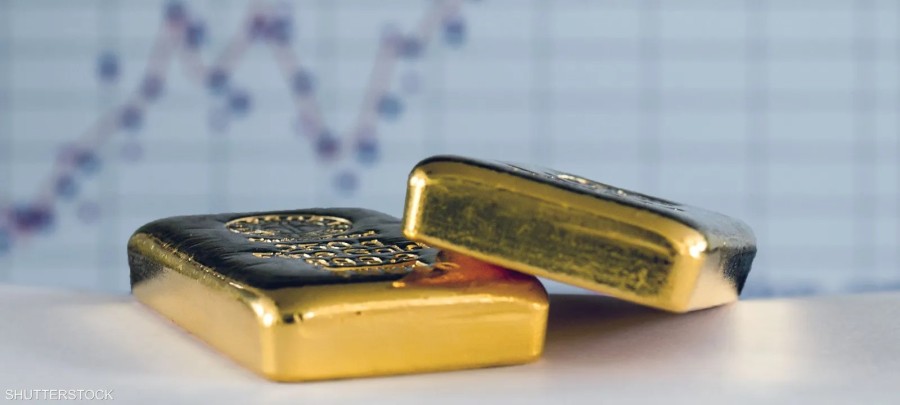
The price of gold rose in spot trading by 0.96% to reach $4,587 an ounce, after it had fallen in the previous session to its lowest level since March 31, while the yellow metal is still down about 2% since the beginning of the month.
Gold futures in the United States for June delivery also rose by 0.83% to reach $4,599, amid cautious moves by investors.
Other minerals
As for the rest of the precious metals, silver prices rose by 1.1% to $72.26 an ounce, while platinum climbed by 1.9% to $1,914.85, while palladium settled at $1,458.75.
Despite these daily gains, the three metals are also on track to record their second consecutive monthly loss, indicating widespread pressure on the precious metals market as a whole.